El laboratorio de ensayos de JALAS, un entorno extremadamente duro para el calzado de trabajo
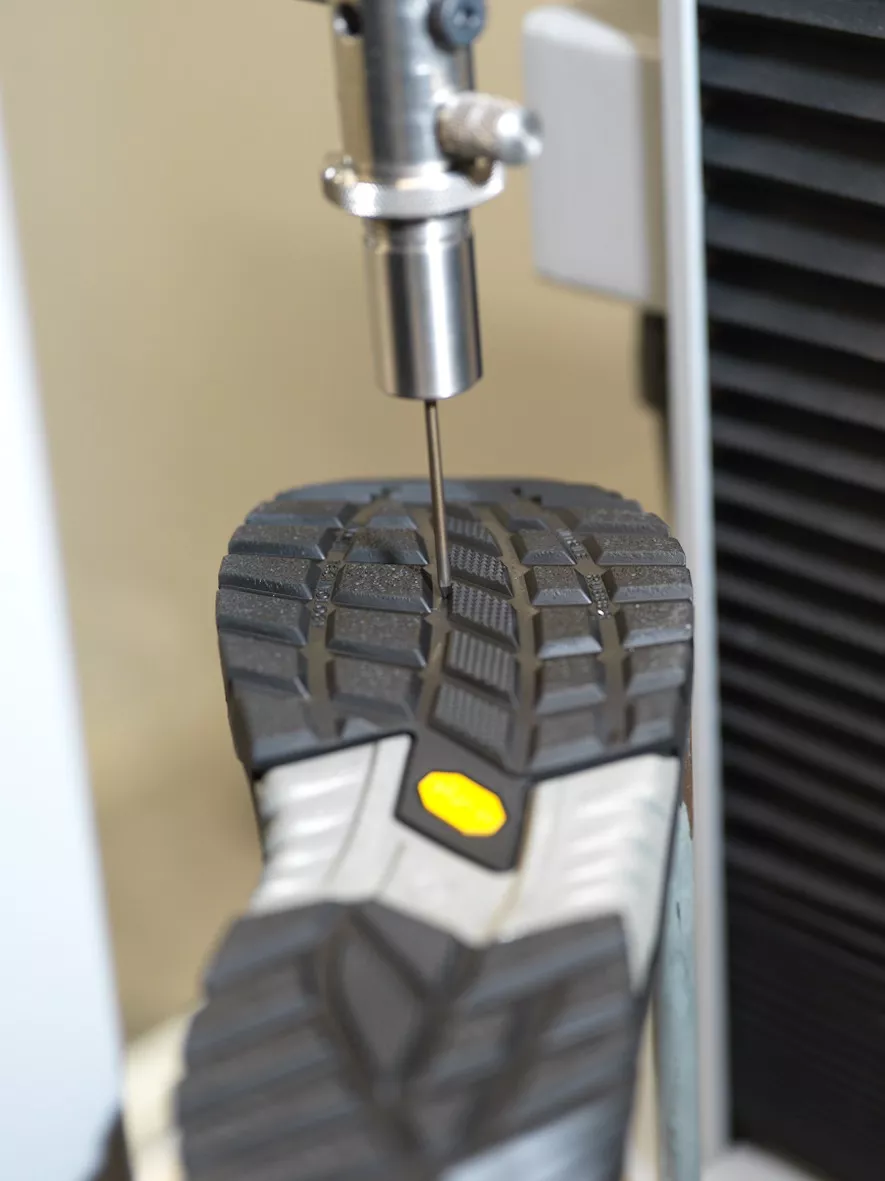
En Jokipii, un pueblo de Jalasjärvi (Finlandia), un moderno laboratorio lleno de equipos de ensayo mecánico y ambiental somete a duras pruebas los nuevos materiales para fabricar calzado de seguridad. Los materiales del calzado se golpean, pinchan, tiran e incluso se doblan repetidamente a −20 °C. Nuestros investigadores exploran los límites de los materiales que empleamos en el calzado de seguridad JALAS.
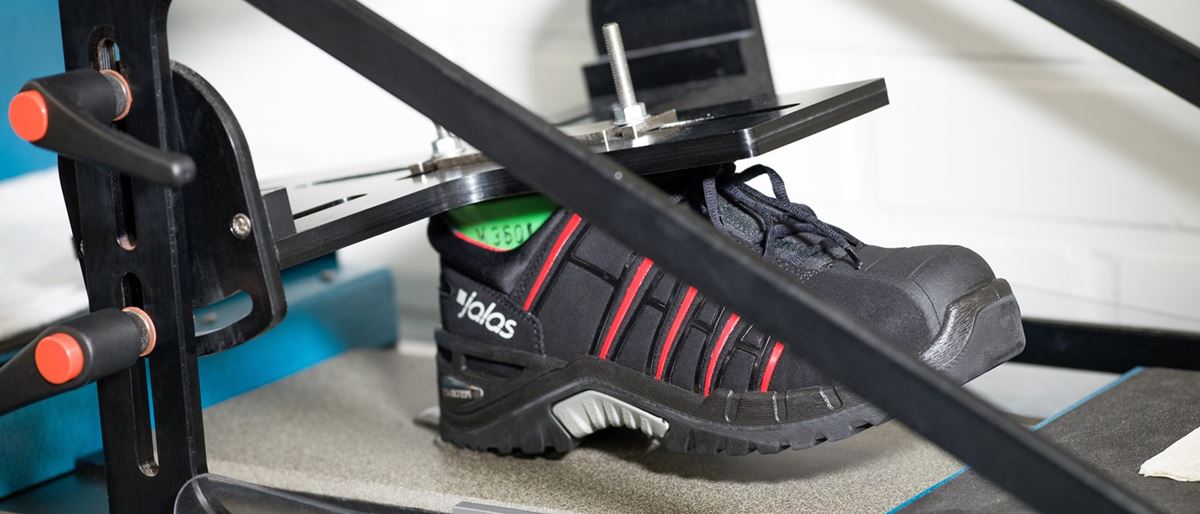
“Nuestro laboratorio de Jokipii cuenta con diez máquinas y podemos hacer 14 ensayos diferentes”, afirma Juho Järvinen, Product Line Director, Departamento de Calzado de Ejendals. “Luego, complementamos los resultados de las máquinas con las pruebas de usuario. Aunque se puede probar la característica anti-deslizante en un laboratorio, en el hielo resbaladizo es donde realmente se pone a prueba la eficacia del material”.
Un laboratorio con muchos propósitos
Como Ejendals fabrica su propio calzado de seguridad JALAS en la empresa, el laboratorio de Jokipii lleva a cabo numerosos ensayos continuos para garantizar la calidad de la producción. El laboratorio también desempeña un papel fundamental en el desarrollo de productos, en consonancia con los objetivos de seguridad, ergonomía y sostenibilidad de Ejendals.
Explore la gama JALAS de calzado de seguridad y calzado de trabajo

JALAS® TIO - inspired by the colors and textures of sports shoes
“When it comes to our latest product, JALAS® TIO, we developed a completely new technology that did not exist on the market,” says Juho. “Our lab needed to test and verify the offering — from idea to finished product.”
“We wanted an ergonomic, soft material with a sporty design. ,” says Juho. “We collected a large selection of materials that were then subjected to different mechanical and environmental tests. We did ambulatory tests that mimic the movements of a foot. And we did flex tests that represent the force our feet apply to the shoe’s sole when we walk. After the tests, we had a few materials left that met all of our requirements for safety, durability, and ergonomics. Then, we made prototypes of the new safety shoes which were in turn , tested by our lab.”
Safety shoes does not last for 20 years
The lab is also used for customer complaints. “It is important to understand how, in different environments, the shoes’ materials are affected and how well they function,” continues Juho. “In the lab, we can try to replicate a user’s experience and see what the data tell us.”
“We follow up every customer complaint carefully. An anecdote: a few years ago, a customer wrote about his safety shoes. Since I work here and I didn't recognize the model, I asked how old the shoes were, they were 20 years old,” Juho laughs and points out that it is important to have reasonable expectations for your work and safety shoes.
Even if a safety shoe manufacturer does life cycle tests, it is difficult to put a “Best before date” on shoes, because it depends on their application environment.
“The basic rule is: If any part of the shoe is broken, it must be replaced,” explains Juho. “The same applies if you drop something heavy on a safety shoe with toe protection. It can be compared to motorcycle helmets: once they have been hit, they should be replaced, as their functionality and protection is affected.”
“If you work in a clean environment, it is not as easy to determine when to replace your work shoes,” notes Juho. “Listen to your body: if your knees and back hurt, it could be because your shoes have become stiff. We usually recommend that you change work shoes every year. But if the shoes are exposed to wear and tear, you may need to change them after six months,” Juho concludes.

About certification of work and safety shoes
All shoes are certified according to the standard corresponding to the area of use. To be certified, the shoes need to undergo at least 40 tests. The certification is carried out by an independent institute. Sometimes standards change and the machines need to be adapted accordingly. The certifications differ between geographic markets.
Example of tests performed at the JALAS lab in Jokipii:
- Martindale Abrasion Tests - for testing the abrasion resistance of materials
- Outsole Flexing Resistance - for testing the flexing resistance of outsoles
- Slip Resistance - for testing the slip resistance of outsoles
- Impact Resistance - for testing for impact resistance of toe caps
- Lastometer Test - for testing the pulling strength of leather (simulates how long the shoe’s toe will last)
- Tear Strength - for testing the tear strength of materials
- Penetration Resistance - for testing the penetration resistance of PTC and steel midsoles
- Compression Resistance - for testing the compression resistance of toe caps
- Water Resistance - for testing the water resistance of complete shoes
- Outsole Abrasion - for testing the abrasion resistance of outsole materials
- Heat Resistance - for testing heat resistance of outsole
- Conductivity - for testing the conductivity of products
Resistivity indicator 100 V ± 5
Metal plate
Metal balls 4 kg, diameter 5 mm