


From Lab to Hand: Developing Gloves That Perform in the Real World
At Ejendals, every product begins with research and ends with real-world performance. This article takes you inside our development and lab testing process to show how new materials like CaloThan™ help us create gloves that offer better protection, comfort, and durability for the people who rely on them every day.

Inside the Ejendals Leksand Lab
The Leksand laboratory is where we test, challenge, and validate TEGERA gloves. Here, our engineers examine materials, push prototypes to their limits, and verify that every glove can withstand real working conditions. This includes everything from mechanical resistance and durability to ergonomics — and, in this case, insulation performance in cold environments.
Meet Belinda Johansson, Laboratory Engineer
For the development of the new TEGERA Cold Supply Gloves, Laboratory Engineer Belinda Johansson conducted a series of tests to evaluate how different insulation materials and glove constructions perform in cold environments. Her role is to examine how materials behave under pressure and to verify which combinations deliver the best protection for the user. In this project, she focused on understanding how effectively CaloThan™ insulates when integrated into a complete glove.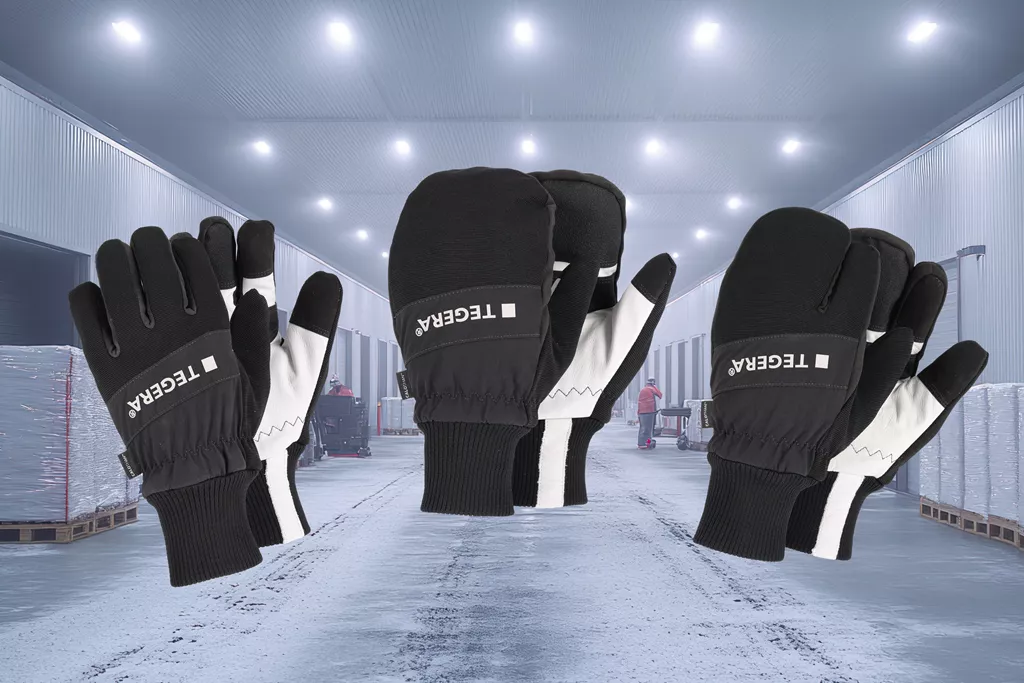
CaloThan™ — Engineered for Cold Protection
One of the key materials examined during the development work was CaloThan™, an insulation material created by Ejendals. Its closed-cell structure forms a dense barrier against contact cold, blocking up to 20% more cold than conventional insulation materials. Despite this high level of protection, CaloThan™ remains lightweight, flexible, and breathable — qualities that are essential for work gloves used in demanding cold environments.
A Visual Test That Shows the Difference
To demonstrate CaloThan™’s insulating ability, the team performed a simple but effective test. A beaker filled with ice was placed on a hot plate — and then the test was repeated with a layer of CaloThan™ under the ice. The comparison clearly showed how CaloThan™ slows heat transfer, making its insulating power easy to see at a glance.
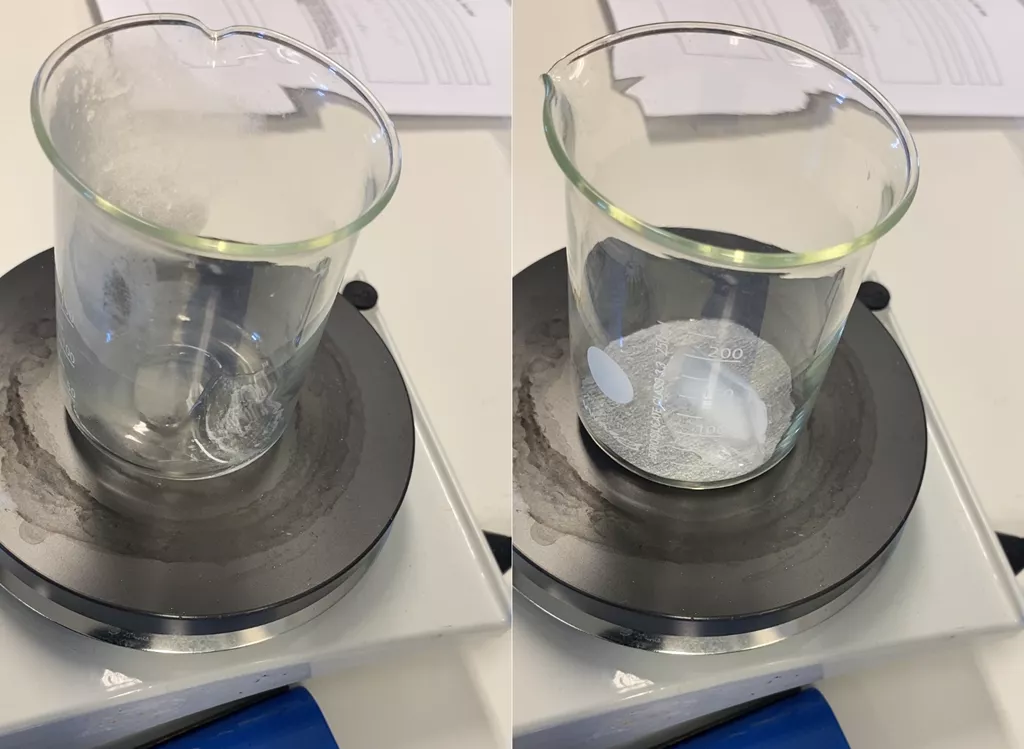
Both images show a beaker of ice on a hot plate at 100°C for 4 minutes; in the second setup, a CaloThan™ layer is added under the ice, visibly demonstrating its insulating effect.
Real-World Testing: Measuring Contact Cold
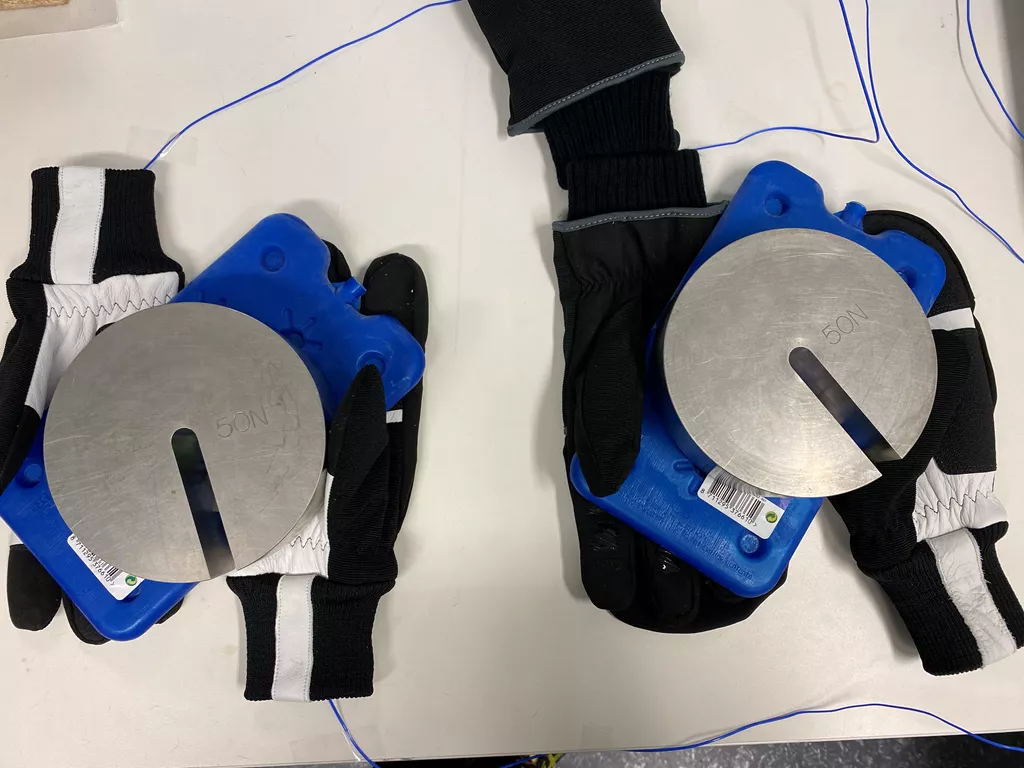
To understand how CaloThan™ performs inside a complete safety glove, Belinda conducted a contact-cold test designed to simulate real working conditions. Temperature sensors were placed inside the palm area of each glove, ice packs were applied, and a 50 N weight was added to mimic the pressure of gripping cold objects. Temperatures were recorded every 10 seconds, revealing how quickly cold penetrated the glove — and how effectively each material combination protected the user.
Clear Results That Benefit the User
Many different gloves were tested during the development work, including several competitor models. Among all the data collected, one comparison stood out for how clearly it demonstrated the difference CaloThan™ can make.
Performance Comparison: With and Without CaloThan™
| Glove Construction | Total Temp Drop (°C) |
|---|---|
| 40 g Thinsulate | 18.7°C |
| 40 g Thinsulate + CaloThan™ | 12.6°C |
| 60 g Thinsulate | 15.6°C |
| 60 g Thinsulate + CaloThan™ | 11.7°C |
Improvement with CaloThan™:
- 40 g: 21% better
- 60 g: 19% better
The temperature drop values show how much the inside of the glove cooled when exposed to the ice pack. A smaller temperature drop means the glove stayed warmer, indicating better insulation.
In the table, the CaloThan™ rows show lower temperature numbers, but this reflects that the glove lost less heat, not more — meaning CaloThan™ kept the inside of the glove warmer throughout the test.
Overall, CaloThan™ improved warmth retention by about 20% compared to the same insulation without it.
Turning Insights Into Better Gloves
Every test Belinda and the team perform helps shape how TEGERA safety gloves are developed and refined. The insights gained from these experiments guide material choices, layer combinations, and glove construction — all with the goal of creating products that genuinely support the people who wear them.
At Ejendals, better materials lead to better protection.
And through continuous testing and evaluation, we ensure that every TEGERA glove is built to perform where it matters most: in real work environments.
Explore the Collection
TEGERA Cold Supply Chain Safety Gloves
Cold rooms, freezer storage, and refrigerated transport are tough on your hands. You need certified cold storage work gloves that block icy air and protect against frozen surfaces. The TEGERA Cold Supply Work Glove Collection keeps you warm, protected, and ready to perform.
Learn More About Calohan™
Why CaloThan™ Matters in the Cold
When your fingers get too cold, ice crystals can form inside the cells and damage the tissue. This can lead to pain, infections, and long-term sensitivity to cold. Materials matter — and CaloThan™ is designed to help protect against these risks. Learn more on why we use it and how it helps keep your hands safer.
You may also be interested in these related blog articles
Protect, Perform, and Design: TEGERA® Creates the Future of Work Gloves
Innovation, comfort, and design come together in TEGERA’s work gloves — developed to protect hands without compromising on function or style. By combining user insights, smart materials, and ergonomic design, TEGERA is shaping the next generation of work gloves: safe, sustainable, and engineered for today’s workplaces.
What 'Biodegradable' Really Means When It Comes to Nitrile Gloves
A closer look at biodegradability claims for nitrile gloves, what they mean and what happens when nitrile breaks down.
TEGERA® 7787 Wins DuPont Kevlar® Innovation Award
TEGERA 7787 has been named a global winner of the DuPont Kevlar® Innovation Award. Read about the award and the team behind its success.
Ejendals Introduces TEGERA® Arc Flash Gloves
Ejendals is proud to introduce the TEGERA® Arc Flash gloves, designed to set a new benchmark in hand protection for high-risk environments. Engineered for professionals in industries like electrical work, where Arc Flash incidents pose a serious threat, these gloves provide unmatched safety and reliability.