


Skridsikkerhedsvurderinger for sikkerhedssko
Efterhånden som sikkerhedsstandarderne udvikler sig er det vigtigt at forstå deres indvirkning på de produkter, vi er afhængige af. Vi talte med Ejendals' Compliance Manager, Sandra Dahlström, om de seneste opdateringer af skridsikkerhedsstandarderne i EN ISO 20345:2022-standarden. Her er hendes indsigt i, hvad disse ændringer betyder for medarbejdere, der søger pålidelig beskyttelse på forskellige overflader.
Vigtige opdateringer i den nye EN ISO 20345:2022-standard
Sandra indledte med at forklare, at EN ISO 20345:2022 introducerer ændringer, der gør det lettere at forstå, hvordan sikkerhedssko fungerer under forskellige forhold, især med hensyn til skridsikkerhed og kravet til at modstå sømpenetration.
Modstand mod sømpenetration
Standarden angiver tre typer af mærkninger, som skelner mellem stål og ikke-metal
P: Sømværn i stål med et testsøm med en diameter på 4,5 mm.
PL: Sømværn i “ikke-metal”, også testet med et testsøm med en diameter på 4,5 mm.
PS: Sømværn i “ikke-metal” testet med et mindre testsøm med en diameter på 3 mm.
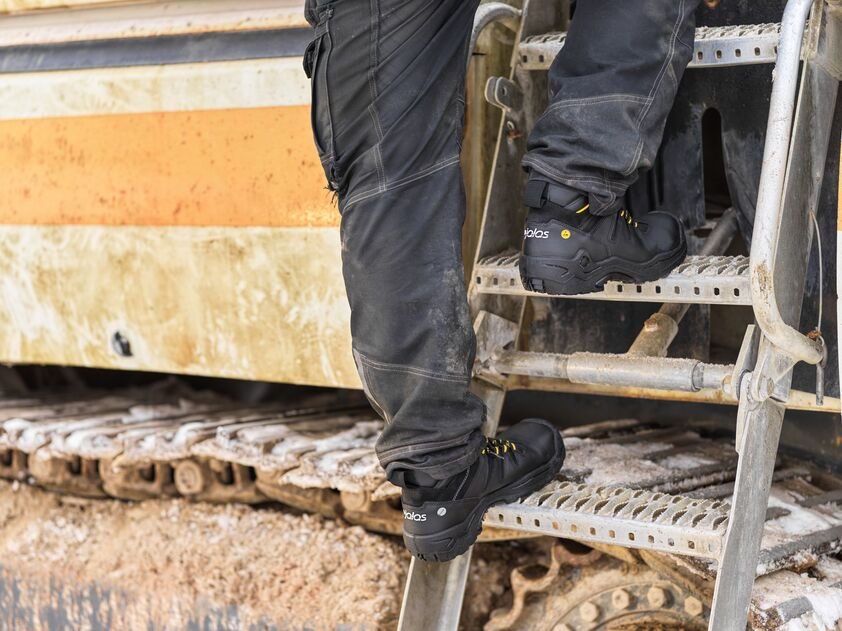
Greb på stige
Dette er nu en ikke-obligatorisk test, der giver en vis fleksibilitet afhængigt af den tilsigtede brug af fodtøjet.
Skridsikkerhed
Er der virkelig en “bedste” vurdering?
En af de vigtigste indsigter, Sandra delte, var, at der ikke findes én enkelt “bedste” vurdering for skridsikkerhed. “Ud fra et standardperspektiv var det aldrig meningen, at disse vurderinger skulle skabe et hierarki af god, bedre og bedst,” forklarede Sandra. I stedet afhænger valget af vurdering i høj grad af de specifikke forhold på arbejdspladsen.
Tidligere klassificerede EN ISO 20345:2011-standarden skridsikkerhed i tre kategorier:
SRA: Testet på flisegulv med flydende sæbe.
SRB: Testet på stålgulv med glycerin.
SRC: Opfyldte kravene fra både SRA og SRB.
Sandra Dahlström
Product Compliance Manager at Ejendals
Discover More about EN ISO 20345:2022
Want to know what else is new in the EN ISO 20345:2022 standard? Find out here.
Under this older standard, SRC might seem like the “best” option, but as Sandra points out, it’s more complex than that.
“An outsole that excels in SRA conditions might not be as effective in SRB conditions, and vice versa. To meet both requirements, some compromises might be made in the design, so SRC approval doesn’t necessarily mean the highest slip resistance in every environment.”
What’s New in EN ISO 20345:2022?
The new 2022 standard has eliminated the SRA, SRB, and SRC classifications to avoid confusion. Instead, slip resistance testing is now a basic requirement, meaning all safety footwear must be tested on ceramic floors with soap solutions without needing a specific marking. However, there is an optional SR test, indicating that the footwear has been tested on a ceramic floor with glycerin, suited for more oily surfaces.
- Mandatory Test (no marking) - Conducted on ceramic floors with soap solution.
- Optional SR Test - Conducted on ceramic floors with glycerin, designed to evaluate the footwear’s performance on oily surfaces.
By incorporating slip resistance as a baseline requirement, the updated standard emphasizes that all certified safety shoes meet a minimum threshold without labeling, making the selection process more straightforward.

Real-World Application: Testing Beyond the Laboratory
Sandra emphasized that while lab-tested slip resistance ratings are helpful, they don’t account for the diverse and unpredictable conditions workers may encounter. “No set of laboratory tests can fully model the wide range of real-life walking surfaces,” she noted. This is why Sandra recommends conducting footwear field trials in the actual workplace environment to assess performance accurately.
A slip-resistant outsole reduces, but doesn’t eliminate, the risk of slipping.
“It’s essential to remember that these ratings indicate potential performance; they aren’t a guarantee. Testing the shoes in the environment where they will be used provides a clearer picture of suitability.”
Conclusion: Choosing the Right Footwear for Your Environment
The EN ISO 20345:2022 update reflects a more holistic approach to safety standards, eliminating the misconception of a “best” slip resistance rating and promoting a focus on the actual needs of the workplace. With slip resistance now a foundational requirement, workers and employers can select footwear with confidence while understanding that some conditions may still require additional trials.
Sandra’s final advice?
“Stay proactive in safety equipment choices. Opt for shoes with slip resistance ratings that align with your specific work environment and, whenever possible, test them on-site to ensure they provide the protection you need.”

Discover JALAS®
JALAS® Work & Safety Shoes are engineered for the ultimate in slip resistance, comfort, and protection. Since 1916, JALAS® has upheld a commitment to quality, with all products designed, developed, and crafted in Jokipii, Finland. Discover our range of safety shoes, boots, and sandals—each built to keep you safe on the job without compromising comfort.