


EN ISO 20345 Standard for sikkerhedssko – Krav og prøvningsmetoder
EN ISO 20345:2022+A1:2024 er den internationale standard, der definerer minimumskravene til sikkerhedssko, der bruges i professionelle miljøer.
Hurtige fakta om EN ISO 20345:2022+A1:2024
- Definerer minimumskrav til sikkerhed for professionelt fodtøj
- Gælder tåbeskyttelse, skridsikkerhed, punkteringsmodstand og meget mere
- Introducerer 8 klassifikationsniveauer: SB til S7
- Omfatter 18 valgfrie beskyttelsesfunktioner (f.eks. A, P, HRO, WP)
- Erstatter ældre WRU-mærkning med WPA og WR
- Skridsikkerhed er nu inkluderet i det grundlæggende krav
Forståelse af EN ISO 20345:2022+A1:2024 – Standard for sikkerhedssko
Standarden sikrer, at certificerede sko og støvler giver pålidelig beskyttelse mod almindelige farer på arbejdspladsen som stød, klemning, stik, udskridning og vandpåvirkning.
Dette er en opdatering af den tidligere standard for sikkerhedssko, EN ISO 20345:2012. Den opdaterede version introducerer klarere klassifikationer, forbedrede testmetoder og nye effektivitetsmærkninger for at afspejle moderne sikkerhedsbehov på tværs af brancher.
Derfor er denne standard vigtig
- Sikrer ensartet sikkerhed på tværs af globale arbejdspladser
- Hjælper med at vælge fodtøj, der overholder standarderne
- Mindsker risikoen for skader fra almindeligt forekommende farer
- Understøtter overholdelse af lovgivning og forsikringskrav
Forklaring af klassifikationer af sikkerhedssko
EN ISO 20345:2022+A1:2024 introducerer otte klassifikationer af sikkerhedssko – SB til S7 – som hver især repræsenterer en specifik kombination af beskyttende egenskaber. Disse bidrager til hurtigt at identificere det beskyttelsesniveau, som en sikkerhedssko tilbyder.
Tabel over klassifikationer
Disse klasser repræsenterer kombinationer af beskyttende egenskaber:
- SB: Grundlæggende tåbeskyttelse
- S1-S3: Tilføj antistatiske egenskaber, vandafvisende overdel og punkteringsmodstand
- S4-S5: Polymerstøvler med lignende egenskaber
- S6-S7: Omfatter fuld vandtæthed (WR)
Tabel, der forklarer klassifikationer, og hvad klassen testes for:
| Klasse | Beskyttende tåkappe | Obligatorisk skridsikkerhed | Lukket bagkappe | A Elektrisk modstand |
E Energiabsorption under hælen |
P Sømværn med metal, type P |
PL Sømværn uden metal, type PL |
PS Sømværn uden metal, type PS |
WPA Vandindtrængning og absorption |
Mønstret ydersål | WR Vandtæthed |
|---|---|---|---|---|---|---|---|---|---|---|---|
| SB | • | • | |||||||||
| S1 | • | • | • | • | • | ||||||
| S1 P | • | • | • | • | • | • | |||||
| S1 PL | • | • | • | • | • | • | |||||
| S1 PS | • | • | • | • | • | • | |||||
| S2 | • | • | • | • | • | • | |||||
| S3 | • | • | • | • | • | • | • | • | |||
| S3 L | • | • | • | • | • | • | • | • | |||
| S3 S | • | • | • | • | • | • | • | • | |||
| S4 | • | • | • | • | • | ||||||
| S5 | • | • | • | • | • | • | • | ||||
| S5 L | • | • | • | • | • | • | • | ||||
| S5 S | • | • | • | • | • | • | • | ||||
| S6 | • | • | • | • | • | • | • | ||||
| S7 | • | • | • | • | • | • | • | • | • | ||
| S7 L | • | • | • | • | • | • | • | • | • | ||
| S7 S | • | • | • | • | • | • | • | • | • |
Skridsikkerhed er obligatorisk i alle klasser
Test af skoens skridsikkerhed er nu en grundlæggede del af certificeringen og et grundlæggende krav, hvorfor det ikke har nogen særlig mærkning. Dette var tidligere mærket som SRA, SRB og SRC.
Ud over den grundlæggende certificering kan du udføre en anden test af skridsikkerhed, som er beregnet til at vurdere fodtøjets effektivitet i fedtede miljøer, og som derefter mærkes SR (Slip Resistance).
For sko med for eksempel dupper, som i praksis kan være svære eller umulige at teste i henhold til standard, kan du mærke skoen med følgende symbol: Ø.
Testmetoderne sigter mod at efterligne virkeligheden – for eksempel udføres alle skridtest på keramiske gulve.
Modstand mod gennemtrængning
Standarden giver en vis præcisering af, hvilket materiale beskyttelsen består af, og hvilken størrelse søm der blev brugt i testene. En mindre diameter giver et højere tryk og dermed højere krav til beskyttelse.
- P: Sømværn i stål med et testsøm med en diameter på 4,5 mm.
- PL: Sømværn i "ikke-metal" med et testsøm med en diameter på 4,5 mm.
- PS: Sømværn i stål med et testsøm med en diameter på 3 mm.
Valgfri ekstra mærkninger i EN ISO 20345:2022+A1:2024
Hver mærkning repræsenterer en testet og certificeret effektivitetsfunktion. Listen med de mulige yderligere krav er illustreret som følger:

Forklaring af valgfrie mærkninger
| Mærkning | Betydning |
|---|---|
| A | Antistatisk fodtøj |
| AN | Ankelbeskyttelse |
| C | Delvist ledende fodtøj |
| CI | Kuldeisolering af sålen |
| CR | Skærebeskyttelse |
| E | Energiabsorption ved hælkappe |
| FO | Ydersålens modstandsdygtighed over for brændstof og olie |
| HI | Sålsammensætning med varmeisolering |
| HRO | Varmeafvisende (testet ved 300 °C / 572 °F) |
| I | Elektricitetsisolerende (dielektrisk fodtøj, der skal beskytte brugeren mod elektrisk stød ved at give et højt niveau af elektrisk isolering) |
| LG | Greb på stige |
| M | Mellemfodsbeskyttelse |
| P | Modstandsdygtighed over for gennemtrængning (sømværn med metal, type P) |
| PL | PS - Modstandsdygtighed over for gennemtrængning (sømværn uden metal) |
| PS | PS - Modstandsdygtighed over for gennemtrængning (sømværn uden metal) |
| SC | Slidstærk tåslidnæse |
| SR | Skridsikkerhed (på klinkegulv med glycerin) |
| WR | Fuld vandtæthed i hele fodtøjet (testet under tryk). Er inkluderet i definitionen af S6 og S7. |
| WPA | Vandgennemtræning og vandoptag |
Sådan vælger du de rigtige sikkerhedssko
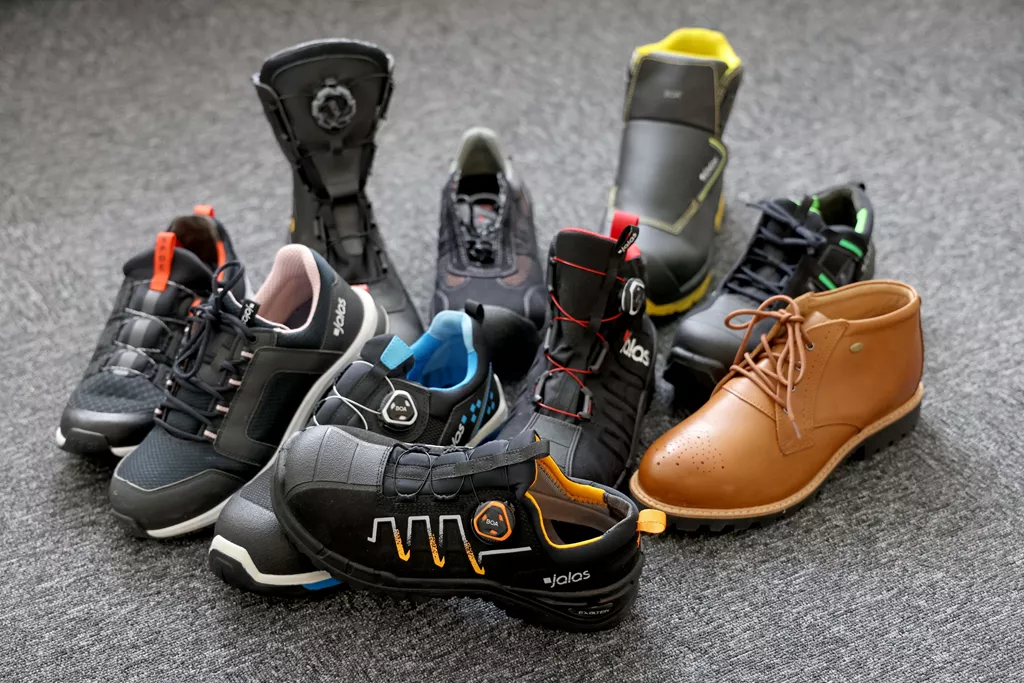
- Vurder dit arbejdsmiljø: Vådt, tørt, koldt, varmt, elektrisk, skarpt affald?
- Find den passende klassifikation: Brug SB-S7 til at finde det rette niveau af grundlæggende beskyttelse.
- Se efter yderligere mærkninger: Vælg funktioner som WP, CI eller HRO baseret på specifikke risici.
We are here to guide you
Wether you have questions about Safety standards, our assortment or how to select the right product, don't hesitate to reach out to us.

Get More Knowledge
Explore All JALAS® Safety Standards
JALAS® Safety Footwear is built to meet a wide range of certified standards from impact and slip resistance to nail penetration protection and ESD. Learn how each standard keeps you safe.