


Einstufungen von Sicherheitsschuhen hinsichtlich der Rutschfestigkeit
Da sich Sicherheitsstandards weiterentwickeln, ist es entscheidend, ihre Auswirkungen auf die Produkte, auf die wir angewiesen sind, zu verstehen. Wir haben mit der Compliance-Expertin von Ejendals, Sandra Dahlström, über die neuesten Aktualisierungen der Anforderungen an die Rutschfestigkeit in der Norm EN ISO 20345:2022 gesprochen. Hier ist ihre Einschätzung dazu, was diese Änderungen für Arbeiter bedeuten, die zuverlässigen Schutz auf unterschiedlichen Oberflächen benötigen.
Wichtige Aktualisierungen der neuen Norm EN ISO 20345:2022
Sandra begann damit, zu erklären, dass die EN ISO 20345:2022 Änderungen einführt, die es erleichtern, zu verstehen, wie Sicherheitsschuhe unter verschiedenen Bedingungen, insbesondere bei Rutschfestigkeit und Nageldurchtrittsicherheit, abschneiden.
Durchtrittshemmende Sohle
Die Norm definiert drei Arten von Kennzeichnungen, die zwischen Stahl- und Nichtmetalloptionen unterscheiden:
P: Stahleinsatz mit einem Testnagel von 4,5 mm Durchmesser.
PL: Nichtmetallischer Einsatz, ebenfalls getestet mit einem Nagel mit 4,5 mm.
PS: Nichtmetallischer Einsatz, getestet mit einem dünneren Nagel mit 3 mm Durchmesser.
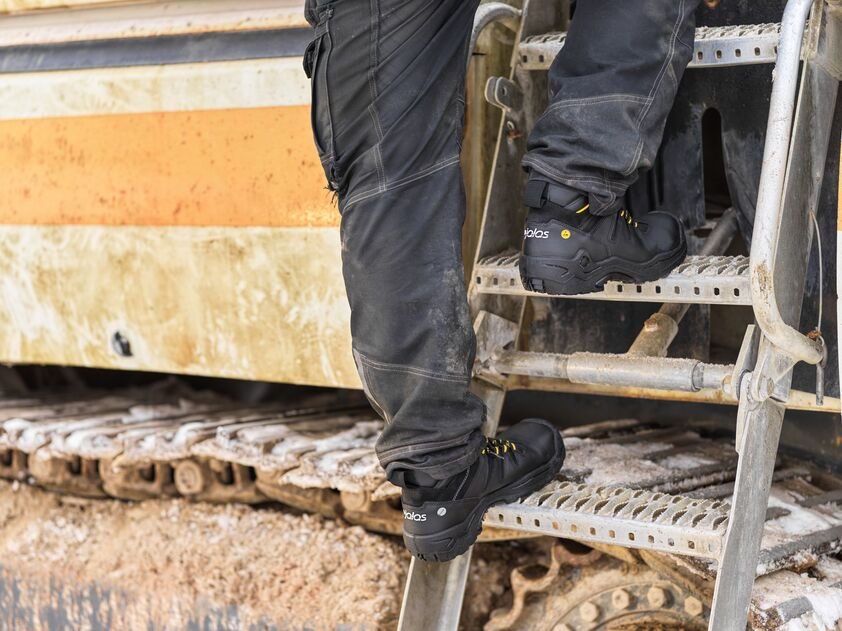
Grip auf der Leiter
Dies ist nun ein nicht verpflichtender Test, der je nach vorgesehenem Einsatzzweck des Schuhwerks eine gewisse Flexibilität ermöglicht.
Rutschfestigkeit
Gibt es wirklich eine “Besteinstufung”?
„Eine der wichtigsten Erkenntnisse, die Sandra teilte, war, dass es keine einzige beste Bewertung für Rutschfestigkeit gibt. Aus Sicht der Normen waren diese Bewertungen nie dazu gedacht, eine Hierarchie von gut, besser und am besten zu schaffen“, erklärte Sandra. Stattdessen hängt die Wahl der Bewertung stark von den spezifischen Bedingungen am Arbeitsplatz ab.
Bisher klassifizierte die Norm EN ISO 20345:2011 die Rutschfestigkeit in drei Kategorien:
SRA: Getestet auf Keramikboden mit Seifenlösung.
SRB: Getestet auf Stahlboden mit Glyzerin.
SRC: Erfüllte die Anforderungen von SRA und SRB.
Sandra Dahlström
Product Compliance Manager at Ejendals
Discover More about EN ISO 20345:2022
Want to know what else is new in the EN ISO 20345:2022 standard? Find out here.
Under this older standard, SRC might seem like the “best” option, but as Sandra points out, it’s more complex than that.
“An outsole that excels in SRA conditions might not be as effective in SRB conditions, and vice versa. To meet both requirements, some compromises might be made in the design, so SRC approval doesn’t necessarily mean the highest slip resistance in every environment.”
What’s New in EN ISO 20345:2022?
The new 2022 standard has eliminated the SRA, SRB, and SRC classifications to avoid confusion. Instead, slip resistance testing is now a basic requirement, meaning all safety footwear must be tested on ceramic floors with soap solutions without needing a specific marking. However, there is an optional SR test, indicating that the footwear has been tested on a ceramic floor with glycerin, suited for more oily surfaces.
- Mandatory Test (no marking) - Conducted on ceramic floors with soap solution.
- Optional SR Test - Conducted on ceramic floors with glycerin, designed to evaluate the footwear’s performance on oily surfaces.
By incorporating slip resistance as a baseline requirement, the updated standard emphasizes that all certified safety shoes meet a minimum threshold without labeling, making the selection process more straightforward.

Real-World Application: Testing Beyond the Laboratory
Sandra emphasized that while lab-tested slip resistance ratings are helpful, they don’t account for the diverse and unpredictable conditions workers may encounter. “No set of laboratory tests can fully model the wide range of real-life walking surfaces,” she noted. This is why Sandra recommends conducting footwear field trials in the actual workplace environment to assess performance accurately.
A slip-resistant outsole reduces, but doesn’t eliminate, the risk of slipping.
“It’s essential to remember that these ratings indicate potential performance; they aren’t a guarantee. Testing the shoes in the environment where they will be used provides a clearer picture of suitability.”
Conclusion: Choosing the Right Footwear for Your Environment
The EN ISO 20345:2022 update reflects a more holistic approach to safety standards, eliminating the misconception of a “best” slip resistance rating and promoting a focus on the actual needs of the workplace. With slip resistance now a foundational requirement, workers and employers can select footwear with confidence while understanding that some conditions may still require additional trials.
Sandra’s final advice?
“Stay proactive in safety equipment choices. Opt for shoes with slip resistance ratings that align with your specific work environment and, whenever possible, test them on-site to ensure they provide the protection you need.”

Discover JALAS®
JALAS® Work & Safety Shoes are engineered for the ultimate in slip resistance, comfort, and protection. Since 1916, JALAS® has upheld a commitment to quality, with all products designed, developed, and crafted in Jokipii, Finland. Discover our range of safety shoes, boots, and sandals—each built to keep you safe on the job without compromising comfort.