


Categorías de riesgo para los guantes de seguridad: comprensión de los niveles de protección
El marcado CE confirma que un modelo de guante de seguridad cumple los requisitos esenciales de salud y seguridad definidos por la legislación europea. En virtud del Reglamento (UE) 2016/425 sobre los EPI de la UE, todos los guantes de protección con marcado CE se clasifican en una de tres categorías en función del nivel de riesgo contra el que están diseñados para proteger, lo que garantiza un rendimiento de seguridad coherente en todos los sectores.

Categorías de riesgo de los guantes de seguridad
Las categorías de riesgo forman parte del marco europeo de EPI y definen cómo se prueban, certifican y aprueban los guantes de seguridad para su comercialización. Cada categoría refleja el uso previsto del guante y la gravedad de los riesgos que está diseñado para mitigar. El Reglamento (UE) 2016/425 divide los equipos de protección personal en tres categorías en función del nivel de riesgo implicado.
Comprender la categorización de riesgos ayuda a garantizar que los guantes de protección no solo cumplan la normativa, sino que también sean adecuados para las condiciones de trabajo en las que se utilicen. Esto permite tomar mejores decisiones de compra, comparar productos con mayor claridad y obtener resultados más seguros en el trabajo.
Los guantes de seguridad TEGERA llevan el marcado CE y están certificados para la categoría adecuada, proporcionando una protección fiable que se ajusta a las normas de seguridad europeas.
Categoría CE I: riesgo mínimo
Los guantes de categoría I están diseñados para proteger frente a riesgos mínimos, como lesiones superficiales, abrasión leve o contacto con productos de limpieza. Estos guantes pueden ser autocertificados por el fabricante, quien debe poder demostrar que el producto cumple los requisitos básicos para los guantes de protección y es responsable de garantizar el marcado CE.
Aunque los guantes de categoría I ofrecen una protección y un confort básicos, no son adecuados para tareas que impliquen riesgos mecánicos, químicos o térmicos.
Aplicaciones habituales:
- Limpieza ligera, para proteger de la suciedad
- Jardinería
- Trabajos básicos de montaje
¿Por qué es importante?
Los guantes de categoría I ofrecen una protección y un confort básicos. Son ideales para entornos de bajo riesgo, pero nunca deben utilizarse donde sea posible la exposición a riesgos mecánicos, químicos o térmicos.

Ejemplo de guante de jardinería de categoría I, TEGERA Tällberg 90014.
Categoría CE II: otros riesgos
Los guantes de categoría II están diseñados para proteger frente a riesgos moderados como abrasión, cortes, pinchazos y exposición química o térmica limitada, no incluidos en las categorías I o III. Estos guantes cumplen con los requisitos básicos y normas adicionales que se aplican a áreas específicas de uso. Para obtener la certificación, deben ser probados por un laboratorio autorizado y homologados por un organismo notificado que emite certificados oficiales.
Esta categoría abarca una amplia variedad de aplicaciones profesionales y suele asociarse a normas EN como la EN 388 (protección mecánica) y la EN 407 (resistencia al calor).
Aplicaciones habituales:
- Edificación y construcción: manipulación de herramientas, materiales y superficies con riesgos mecánicos moderados.
- Industria manufacturera y pesada: ensamblaje general, logística y manejo de maquinaria donde los guantes con clasificación EN 388 son habituales.
- Sector del transporte: tareas de carga, descarga y mantenimiento de vehículos.
- Sector primario (silvicultura, agricultura, pesca, minería): protección contra espinas, superficies rugosas y exposición medioambiental moderada.
- Seguridad y servicios uniformados: tareas de patrulla y manipulación que requieren destreza y resistencia al corte.
¿Por qué es importante?
Los guantes de categoría II ofrecen una protección fiable para las tareas cotidianas con riesgos moderados. Su certificación garantiza un rendimiento constante, lo que los convierte en una opción fiable en numerosos sectores.
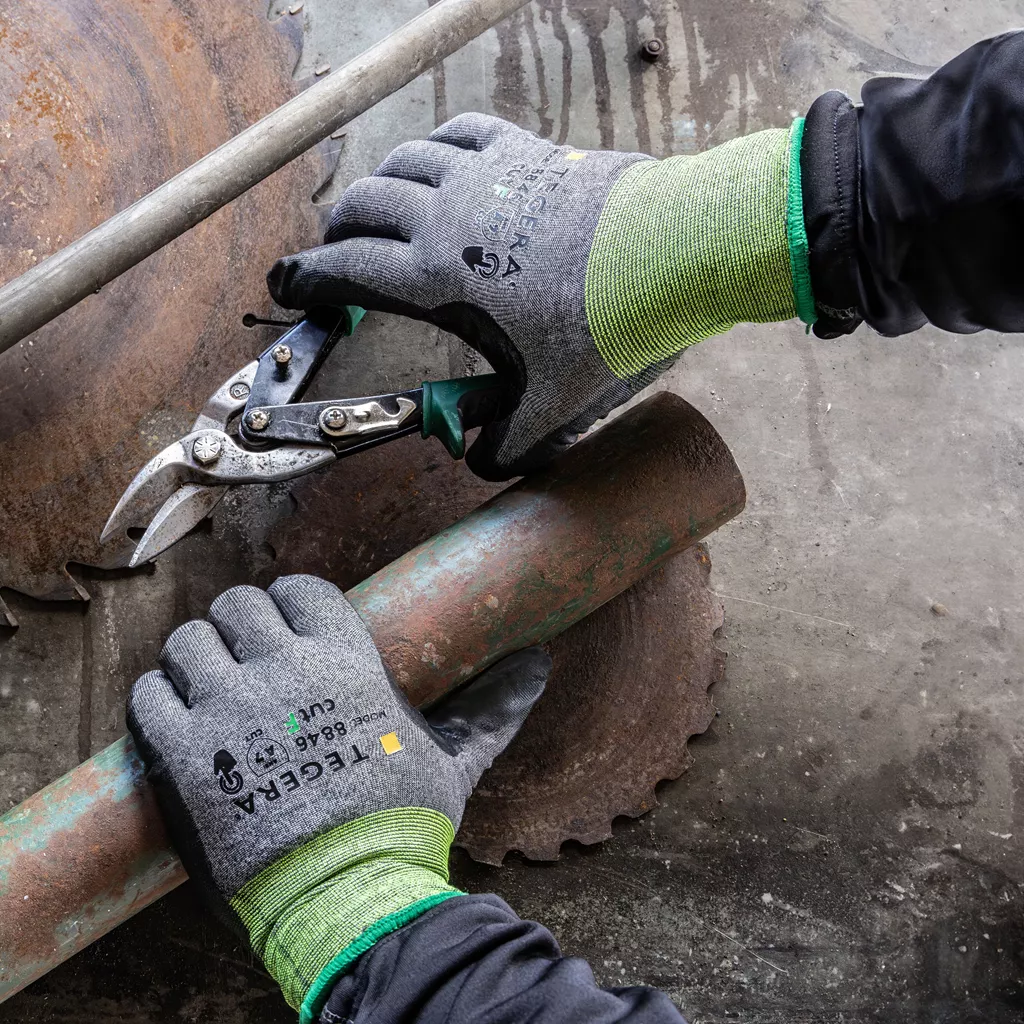
Ejemplo de guante de categoría II, TEGERA 8846.
Categoría CE III: alto riesgo
Los guantes de categoría III están diseñados para riesgos graves, en los que la exposición puede provocar daños irreversibles para la salud o incluso la muerte. Esta categoría incluye la protección exclusiva contra riesgos como productos químicos tóxicos, calor extremo, condiciones criogénicas, riesgos eléctricos y riesgos biológicos.
Para cumplir con los requisitos de la categoría III, los guantes deben ser probados por un laboratorio autorizado y homologados de tipo por un organismo notificado. Además, el proceso de producción se somete a inspecciones anuales para garantizar una calidad y un cumplimiento constantes. El código de identidad de cuatro dígitos del organismo notificado debe aparecer directamente después del marcado CE (por ejemplo, CE 0123) para confirmar la vigilancia y certificación en curso.
Aplicaciones habituales:
- Sector energético: Exposición a alta tensión, temperaturas extremas y sustancias peligrosas.
- Manipulación de productos químicos: Manipulación de sustancias y productos químicos corrosivos o tóxicos.
- Soldadura y fundición: Calor elevado, metal fundido y exposición a las llamas.
- Minería: Riesgo de lesiones por aplastamiento, exposición a productos químicos y condiciones ambientales extremas.
¿Por qué es importante?
Los guantes de categoría III son fundamentales en entornos de alto riesgo. Su certificación garantiza el máximo nivel de protección y control de calidad, allí donde el fallo no es una opción y la seguridad debe estar garantizada.
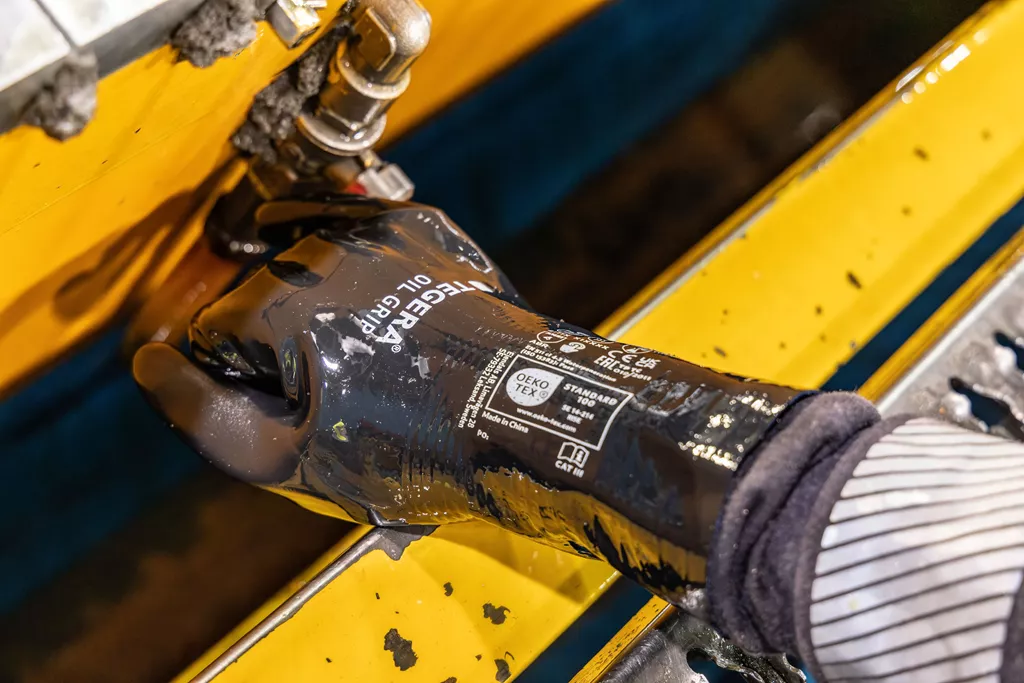
Ejemplo de guante de categoría III, TEGERA Oil Grip 8853.
We are here to guide you
Wether you have questions about safety standards, our assortment or how to select the right product, don't hesitate to reach out to us.
Get more Knowledge
Explore All TEGERA Safety Standards
TEGERA safety gloves are developed to meet a wide range of certified standards—from cut and chemical protection to heat resistance and cold insulation. Explore how each standard contributes to safer work environments and helps keep workers protected across every task.