


Turvajalkineiden pohjan pidon luokitukset
Turvallisuusstandardien kehittyessä on tärkeää ymmärtää niiden vaikutus käyttämiimme tuotteisiin. Keskustelimme Ejendalsin vaatimustenmukaisuusasiantuntijan Sandra Dahlströmin kanssa uusimmista päivityksistä koskien pohjan pitovaatimuksia standardissa EN ISO 20345:2022. Tässä on hänen näkemyksensä siitä, mitä nämä muutokset tarkoittavat työntekijöille, jotka haluavat luotettavan pidon eri pinnoilla.
Uuden EN ISO 20345:2022 -standardin tärkeimmät päivitykset
Sandra aloitti selittämällä, että EN ISO 20345:2022 ‑standardiin on tehty muutoksia, jotka helpottavat turvajalkineiden suorituskyvyn ymmärtämistä eri olosuhteissa, erityisesti pidon ja lävistyskestävyyden osalta.
Lävistyskestävyys
Standardissa määritellään kolme merkintää, joilla erotetaan teräksiset ja metallittomat vaihtoehdot:
P: Teräksinen naulaanastumissuoja, joka on testattu halkaisijaltaan 4,5 mm:n naulalla.
PL: Metalliton naulaanstumissuoja, niin ikään testattu halkaisijaltaan 4,5 mm:n naulalla.
PS: Metalliton naulaanastumissuoja, joka on testattu pienemmällä, halkaisijaltaan 3 mm:n naulalla.
Pito tikkailla
Tämä on nykyään vapaaehtoinen testi, joka sallii jonkin verran joustonvaraa jalkineen käyttötarkoituksen mukaan.
Pohjan pito
Onko todella olemassa ”paras” luokitus?
Yksi tärkeimmistä Sandran kertomista asioista oli se, että yhtä ainoaa ”parasta” pitoluokitusta ei ole olemassa. ”Standardien näkökulmasta näiden luokitusten ei koskaan ollut tarkoitus asettaa hyvää, parempaa ja parasta luokitusta hierarkkiseen järjestykseen”, Sandra selitti. Sen sijaan luokituksen valintaan vaikuttavat merkittävästi työpaikan erityisolosuhteet.
Aiemmin pohjan pito jaettiin standardissa EN ISO 20345:2011 kolmeen luokkaan:
SRA: Testattu keraamisella alustalla, väliaineena saippua.
SRB: Testattu teräsalustalla, väliaineena glyseriini.
SRC: Täyttää sekä SRA:n että SRB:n vaatimukset.
Sandra Dahlström
Product Compliance Manager at Ejendals
Discover More about EN ISO 20345:2022
Want to know what else is new in the EN ISO 20345:2022 standard? Find out here.
Under this older standard, SRC might seem like the “best” option, but as Sandra points out, it’s more complex than that.
“An outsole that excels in SRA conditions might not be as effective in SRB conditions, and vice versa. To meet both requirements, some compromises might be made in the design, so SRC approval doesn’t necessarily mean the highest slip resistance in every environment.”
What’s New in EN ISO 20345:2022?
The new 2022 standard has eliminated the SRA, SRB, and SRC classifications to avoid confusion. Instead, slip resistance testing is now a basic requirement, meaning all safety footwear must be tested on ceramic floors with soap solutions without needing a specific marking. However, there is an optional SR test, indicating that the footwear has been tested on a ceramic floor with glycerin, suited for more oily surfaces.
- Mandatory Test (no marking) - Conducted on ceramic floors with soap solution.
- Optional SR Test - Conducted on ceramic floors with glycerin, designed to evaluate the footwear’s performance on oily surfaces.
By incorporating slip resistance as a baseline requirement, the updated standard emphasizes that all certified safety shoes meet a minimum threshold without labeling, making the selection process more straightforward.

Real-World Application: Testing Beyond the Laboratory
Sandra emphasized that while lab-tested slip resistance ratings are helpful, they don’t account for the diverse and unpredictable conditions workers may encounter. “No set of laboratory tests can fully model the wide range of real-life walking surfaces,” she noted. This is why Sandra recommends conducting footwear field trials in the actual workplace environment to assess performance accurately.
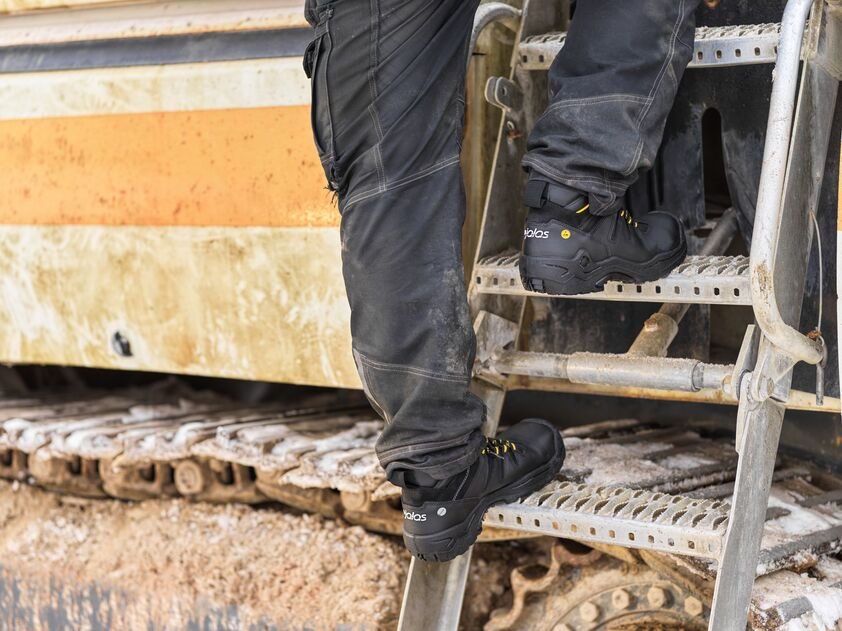
A slip-resistant outsole reduces, but doesn’t eliminate, the risk of slipping.
“It’s essential to remember that these ratings indicate potential performance; they aren’t a guarantee. Testing the shoes in the environment where they will be used provides a clearer picture of suitability.”
Conclusion: Choosing the Right Footwear for Your Environment
The EN ISO 20345:2022 update reflects a more holistic approach to safety standards, eliminating the misconception of a “best” slip resistance rating and promoting a focus on the actual needs of the workplace. With slip resistance now a foundational requirement, workers and employers can select footwear with confidence while understanding that some conditions may still require additional trials.
Sandra’s final advice?
“Stay proactive in safety equipment choices. Opt for shoes with slip resistance ratings that align with your specific work environment and, whenever possible, test them on-site to ensure they provide the protection you need.”

Discover JALAS®
JALAS® Work & Safety Shoes are engineered for the ultimate in slip resistance, comfort, and protection. Since 1916, JALAS® has upheld a commitment to quality, with all products designed, developed, and crafted in Jokipii, Finland. Discover our range of safety shoes, boots, and sandals—each built to keep you safe on the job without compromising comfort.