


Classificazioni di resistenza antiscivolo nelle scarpe antinfortunistiche
Dato l’evolversi degli standard di sicurezza, è fondamentale capire il loro impatto sui prodotti a cui ci affidiamo. Abbiamo parlato con l’esperta di conformità di Ejendals, Sandra Dahlström, degli ultimi aggiornamenti agli standard per la resistenza antiscivolo nella normativa EN ISO 20345:2022. Ecco la sua opinione su cosa comportano questi cambiamenti per i lavoratori che desiderano una protezione affidabile per varie superfici.

Aggiornamenti principali nella nuova norma EN ISO 20345:2022
Sandra ha esordito spiegando che la norma EN ISO 20345:2022 introduce modifiche che consentono di comprendere più facilmente le prestazioni delle calzature antinfortunistiche in diverse condizioni, in particolare per quanto riguarda la resistenza antiscivolo e alla perforazione da chiodi.
Resistenza alla perforazione da chiodi
La norma specifica tre tipi di marcatura, distinguendo tra opzioni in acciaio e non in metallo:
P: inserto in acciaio testato con un chiodo con diametro di 4,5 mm.
PL: inserto non metallico, testato anch’esso con un chiodo da 4,5 mm.
PS: inserto non metallico testato con un chiodo con diametro di 3 mm.
Presa su scala
Si tratta di un test non obbligatorio, che consente una certa flessibilità in base all’uso previsto della calzatura.
Resistenza antiscivolo
Esiste davvero una classificazione come “Massima”?
Una delle intuizioni più importanti che Sandra ha condiviso è che non esiste una classificazione univoca come “massima” resistenza antisciovolo. “Dal punto di vista degli standard, queste classificazioni non hanno mai avuto lo scopo di creare una gerarchia di buono, migliore e massimo”, ha spiegato Sandra. La scelta della classificazione dipende in larga misura dalle condizioni specifiche del luogo di lavoro.
In precedenza, la norma EN ISO 20345:2011 classificava la resistenza antiscivolo in tre categorie:
SRA: testato su un pavimento in ceramica con una soluzione saponata.
SRB: testato su un pavimento in acciaio con glicerina.
SRC: soddisfa i requisiti di SRA E SRB.
Sandra Dahlström
Product Compliance Manager at Ejendals
Discover More about EN ISO 20345:2022
Want to know what else is new in the EN ISO 20345:2022 standard? Find out here.
Under this older standard, SRC might seem like the “best” option, but as Sandra points out, it’s more complex than that.
“An outsole that excels in SRA conditions might not be as effective in SRB conditions, and vice versa. To meet both requirements, some compromises might be made in the design, so SRC approval doesn’t necessarily mean the highest slip resistance in every environment.”
What’s New in EN ISO 20345:2022?
The new 2022 standard has eliminated the SRA, SRB, and SRC classifications to avoid confusion. Instead, slip resistance testing is now a basic requirement, meaning all safety footwear must be tested on ceramic floors with soap solutions without needing a specific marking. However, there is an optional SR test, indicating that the footwear has been tested on a ceramic floor with glycerin, suited for more oily surfaces.
- Mandatory Test (no marking) - Conducted on ceramic floors with soap solution.
- Optional SR Test - Conducted on ceramic floors with glycerin, designed to evaluate the footwear’s performance on oily surfaces.
By incorporating slip resistance as a baseline requirement, the updated standard emphasizes that all certified safety shoes meet a minimum threshold without labeling, making the selection process more straightforward.

Real-World Application: Testing Beyond the Laboratory
Sandra emphasized that while lab-tested slip resistance ratings are helpful, they don’t account for the diverse and unpredictable conditions workers may encounter. “No set of laboratory tests can fully model the wide range of real-life walking surfaces,” she noted. This is why Sandra recommends conducting footwear field trials in the actual workplace environment to assess performance accurately.
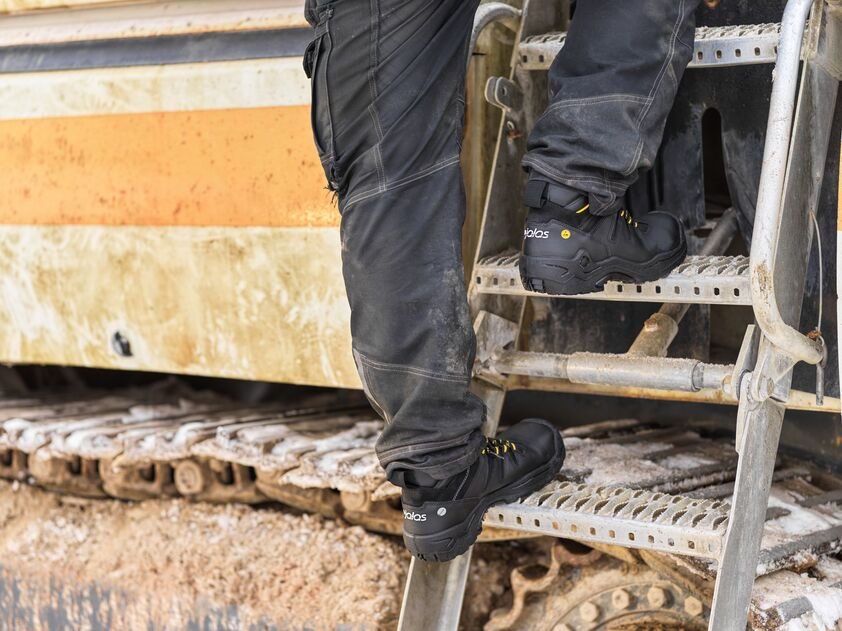
A slip-resistant outsole reduces, but doesn’t eliminate, the risk of slipping.
“It’s essential to remember that these ratings indicate potential performance; they aren’t a guarantee. Testing the shoes in the environment where they will be used provides a clearer picture of suitability.”
Conclusion: Choosing the Right Footwear for Your Environment
The EN ISO 20345:2022 update reflects a more holistic approach to safety standards, eliminating the misconception of a “best” slip resistance rating and promoting a focus on the actual needs of the workplace. With slip resistance now a foundational requirement, workers and employers can select footwear with confidence while understanding that some conditions may still require additional trials.
Sandra’s final advice?
“Stay proactive in safety equipment choices. Opt for shoes with slip resistance ratings that align with your specific work environment and, whenever possible, test them on-site to ensure they provide the protection you need.”

Discover JALAS®
JALAS® Work & Safety Shoes are engineered for the ultimate in slip resistance, comfort, and protection. Since 1916, JALAS® has upheld a commitment to quality, with all products designed, developed, and crafted in Jokipii, Finland. Discover our range of safety shoes, boots, and sandals—each built to keep you safe on the job without compromising comfort.