


Oceny odporności na poślizg w butach bezpiecznych
W miarę ewolucji norm bezpieczeństwa kluczowe znaczenie ma zrozumienie ich wpływu na produkty, na których polegamy. Porozmawialiśmy z ekspertką Ejendals ds. zgodności, Sandrą Dahlström, o najnowszych aktualizacjach norm odporności na poślizg zawartych w regulacji EN ISO 20345:2022. Oto jej spostrzeżenia na temat tego, co te zmiany oznaczają dla pracowników poszukujących niezawodnej ochrony na różnych powierzchniach.

Kluczowe aktualizacje w nowej normie EN ISO 20345:2022
Sandra rozpoczęła od wyjaśnienia, że norma EN ISO 20345:2022 wprowadza zmiany, które ułatwiają zrozumienie, jak obuwie bezpieczne sprawdza się w różnych warunkach, szczególnie w zakresie odporności na poślizg i przebicie.
Odporność na przebicie
Norma określa trzy rodzaje oznaczeń, rozróżniając rozwiązania stalowe i niemetalowe:
P: Stalowa wkładka testowana z użyciem gwoździa o średnicy 4,5 mm.
PL: Niemetalowa wkładka również testowana z użyciem gwoździa o średnicy 4,5 mm.
PS: Niemetalowa wkładka testowana z użyciem gwoździa o mniejszej średnicy, 3 mm.
Przyczepność do drabiny
Obecnie jest to nieobowiązkowy test, który zapewnia pewną elastyczność w zależności od przeznaczenia obuwia.
Odporność na poślizg
Czy naprawdę istnieje „najlepsza” ocena?
Jedną z najważniejszych informacji, które Sandra przedstawiła, było to, że nie ma jednej „najlepszej” oceny odporności na poślizg. „Z punktu widzenia normy oceny te nigdy nie miały na celu stworzenia hierarchii dobrych, lepszych i najlepszych” — wyjaśniła Sandra. Zamiast tego wybór oceny zależy w dużej mierze od konkretnych warunków w miejscu pracy.
Wcześniej norma EN ISO 20345:2011 klasyfikowała odporność na poślizg w trzech kategoriach:
SRA: przetestowano na podłodze ceramicznej z roztworem mydła.
SRB: przetestowano na podłodze stalowej z gliceryną.
SRC: spełnia wymagania zarówno SRA, jak i SRB.
Sandra Dahlström
Product Compliance Manager at Ejendals
Discover More about EN ISO 20345:2022
Want to know what else is new in the EN ISO 20345:2022 standard? Find out here.
Under this older standard, SRC might seem like the “best” option, but as Sandra points out, it’s more complex than that.
“An outsole that excels in SRA conditions might not be as effective in SRB conditions, and vice versa. To meet both requirements, some compromises might be made in the design, so SRC approval doesn’t necessarily mean the highest slip resistance in every environment.”
What’s New in EN ISO 20345:2022?
The new 2022 standard has eliminated the SRA, SRB, and SRC classifications to avoid confusion. Instead, slip resistance testing is now a basic requirement, meaning all safety footwear must be tested on ceramic floors with soap solutions without needing a specific marking. However, there is an optional SR test, indicating that the footwear has been tested on a ceramic floor with glycerin, suited for more oily surfaces.
- Mandatory Test (no marking) - Conducted on ceramic floors with soap solution.
- Optional SR Test - Conducted on ceramic floors with glycerin, designed to evaluate the footwear’s performance on oily surfaces.
By incorporating slip resistance as a baseline requirement, the updated standard emphasizes that all certified safety shoes meet a minimum threshold without labeling, making the selection process more straightforward.

Real-World Application: Testing Beyond the Laboratory
Sandra emphasized that while lab-tested slip resistance ratings are helpful, they don’t account for the diverse and unpredictable conditions workers may encounter. “No set of laboratory tests can fully model the wide range of real-life walking surfaces,” she noted. This is why Sandra recommends conducting footwear field trials in the actual workplace environment to assess performance accurately.
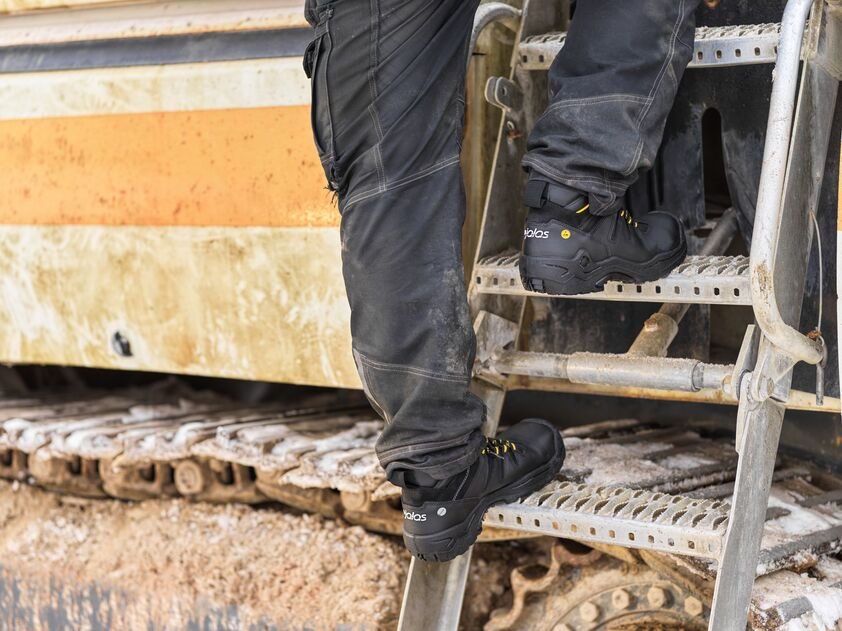
A slip-resistant outsole reduces, but doesn’t eliminate, the risk of slipping.
“It’s essential to remember that these ratings indicate potential performance; they aren’t a guarantee. Testing the shoes in the environment where they will be used provides a clearer picture of suitability.”
Conclusion: Choosing the Right Footwear for Your Environment
The EN ISO 20345:2022 update reflects a more holistic approach to safety standards, eliminating the misconception of a “best” slip resistance rating and promoting a focus on the actual needs of the workplace. With slip resistance now a foundational requirement, workers and employers can select footwear with confidence while understanding that some conditions may still require additional trials.
Sandra’s final advice?
“Stay proactive in safety equipment choices. Opt for shoes with slip resistance ratings that align with your specific work environment and, whenever possible, test them on-site to ensure they provide the protection you need.”

Discover JALAS®
JALAS® Work & Safety Shoes are engineered for the ultimate in slip resistance, comfort, and protection. Since 1916, JALAS® has upheld a commitment to quality, with all products designed, developed, and crafted in Jokipii, Finland. Discover our range of safety shoes, boots, and sandals—each built to keep you safe on the job without compromising comfort.