


EN ISO 374 Standard – Protective Gloves Against Chemicals and Micro-organisms
EN ISO 374 is the European standard that defines how protective gloves are tested and classified for resistance against hazardous chemicals and micro-organisms. It ensures gloves meet strict safety requirements to protect users in environments where chemical and biological risks are present.
Overview of EN ISO 374 Standard
The EN ISO 374:2016+A1:2018 standard is divided into five parts, each addressing a specific type of risk or testing method.
This video explains the different types of chemical risks there is when working with chemicals.
EN 374-1: Terminology and Performance Requirements for Chemical Risks
This part defines the classification system for gloves based on their chemical resistance. Gloves are categorized into three types:

- Type A: Resistant to at least 6 chemicals for ≥30 minutes
- Type B: Resistant to at least 3 chemicals for ≥30 minutes
- Type C: Resistant to at least 1 chemical for ≥10 minutes
| Type of glove | Marking | Requirement |
|---|---|---|
| Type A | EN374-1 / Type A | Breakthrough time ≥ 30 min for at least 6 chemicals in the list |
| Type B | EN374-1 / Type B | Breakthrough time ≥ 30 min for at least 3 chemicals in the list |
| Type C | EN374-1 / Type C | Breakthrough time ≥ 10 min for at least 1 chemical in the list |
| Permeation level | Breakthrough time (min) |
|---|---|
| 1 | >10 |
| 2 | >30 |
| 3 | >60 |
| 4 | >120 |
| 5 | >240 |
| 6 |
>480 |
List of Test Chemicals
The standard includes a list of 18 test chemicals, each represented by a code letter, used to evaluate glove performance. The list was expanded in the latest version of the standard to include six additional chemicals to reflect the growing variety used in industrial applications.
| Code letter | Chemical | CAS Number | Class |
|---|---|---|---|
| A | Methanol | 67-56-1 | Primary alcohol |
| B | Acetone | 67-64-1 | Ketone |
| C | Acetonitrile | 75-05-8 | Nitrile compound |
| D | Dichloromethane | 75-09-2 | Chlorinated hydrocarbon |
| E | Carbon disulphide | 75-15-0 | Sulphur containing organic compound |
| F | Toluene | 108-88-3 | Aromatic hydrocarbon |
| G | Diethylamine | 109-89-7 | Amine |
| H | Tetrahydrofuran | 109-99-9 | Heterocyclic and ether compound |
| I | Ethyl acetate | 141-78-6 | Ester |
| J | n-Heptane | 142-82-5 | Saturated hydrocarbon |
| K | Sodium hydroxide 40% | 1310-73-2 | Inorganic base |
| L | Sulphuric acid 96% | 7664-93-9 | Inorganic mineral acid, oxidizing |
| M | Nitric acid 65% | 7697-37-2 | Inorganic mineral acid, oxidizing |
| N | Acetic acid 99% | 64-19-7 | Organic acid |
| O | Ammonium hydroxide 25% | 1336-21-6 | Organic base |
| P | Hydrogen peroxide 30% | 7722-84-1 | Peroxide |
| S | Hydrofluoric acid 40% | 7664-39-3 | Inorganic mineral acid |
| T | Formaldehyde 37% | 50-00-0 | Aldehyde |
EN 374-2: Resistance to Penetration
Gloves that are to give protection against micro-organisms and chemicals must be impenetrable (without holes). For thin, disposable gloves, penetrability is tested by filling the glove with water or air. If the water or air leaks out, the glove is considered deficient. This test ensures the glove provides a barrier against chemical and biological agents at a macroscopic level.
EN 16523-1 – Resistance to Chemical Permeation (Replaces EN 374-3)
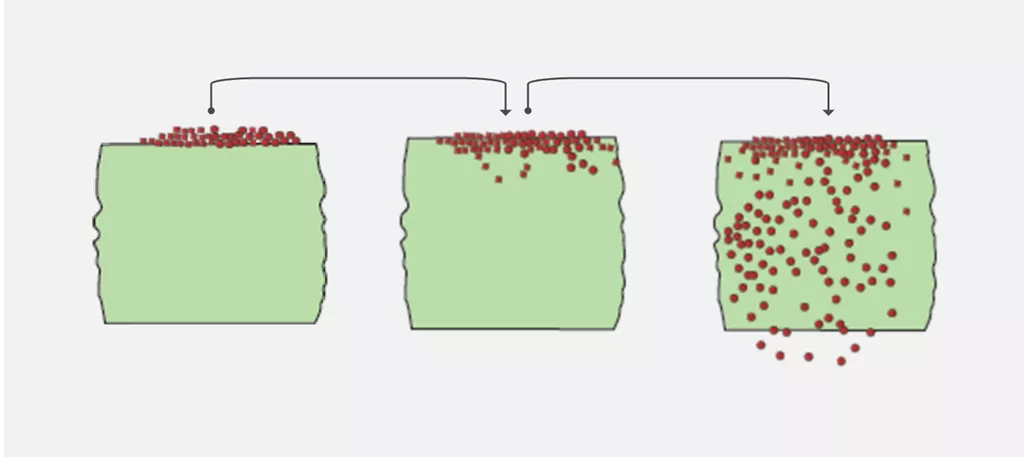
This test method measures the resistance of the glove material to chemical permeation at a molecular level under continuous contact. It determines the breakthrough time for hazardous chemicals and classifies gloves as Type A, B, or C based on performance.
EN 374-4– Resistance to Chemical Degradation
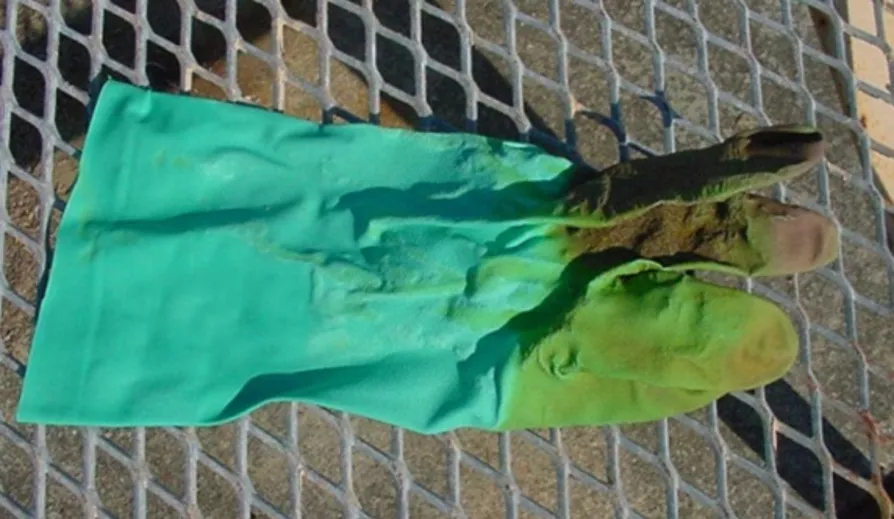
Degradation refers to the deterioration of glove material due to chemical contact. Signs can include delaminating, discoloration, hardening, softening, dimensional change, and/or loss of tensile strength. It is measured by the percentage change in puncture resistance after 1 hour of continuous contact with the test chemical. Results must be included in the glove’s information leaflet for all three glove types.
EN 374-5– Protection Against Micro-organisms
This section introduces testing for virus protection, in addition to bacteria and fungi. New markings on packaging indicate whether gloves protect against:
- Bacteria and fungi only (biohazard pictogram)
- Bacteria, fungi, and viruses (biohazard pictogram + the word "VIRUS")
Additional Virus Protection Testing under EN 374-5
The EN 374-5 standard goes beyond bacteria and fungi protection by introducing virus resistance testing. This is critical for industries where exposure to bloodborne pathogens or infectious materials is a risk.
Test Method
Virus protection is verified using ISO 16604:2004 (Method B), which measures the glove’s resistance to penetration by viruses under pressure.
Marking
Gloves that meet virus protection requirements will display the biohazard pictogram accompanied by the word “VIRUS” on packaging.
Why It Matters
This extra test ensures gloves provide a higher level of biological safety, making them suitable for healthcare, laboratory, and pharmaceutical environments where virus transmission risks are present.
Industries and Applications for EN ISO 374 Certified Gloves
Protective gloves tested under EN ISO 374 are essential in industries where exposure to hazardous chemicals or biological agents is a daily risk. These gloves help ensure worker safety, regulatory compliance, and operational efficiency.
Key Industries and Roles Include:
- Chemical Manufacturing & Handling
- Pharmaceutical & Biotechnology
- Healthcare & Laboratory Services
- Industrial Cleaning & Sanitation
- Agriculture & Pesticide Application
- Oil & Gas Industry
- Food Processing & Packaging
- Automotive & Manufacturing
Frequently Asked Questions (FAQ) about EN 374
What Does EN ISO 374 Standard Test For?
It tests gloves for resistance to chemical penetration, permeation, degradation, and protection against micro-organisms.
What Is the Difference Between Penetration and Permeation?
Penetration refers to physical breaches like holes; permeation is the molecular movement of chemicals through the glove material.
How Many Chemicals Are Tested Under EN ISO 374?
It depends on the glove type. For Type A at lest 6 chemicals need to be tested. Type B require at least 3 chemicals while type A only require 1 chemical to be tested.
Is EN 374-3 Still Valid?
No, EN 374-3 has been replaced by EN 16523-1:2015, which is now the official test method for chemical permeation.
Can Safety Gloves Protect Against viruses?
Yes, if they pass additional testing under ISO 16604:2004 (Method B), they can be certified for virus protection.
We are here to guide you
Wether you have questions about safety standards, our assortment or how to select the right product, don't hesitate to reach out to us.

Get more Knowledge
Explore All TEGERA Safety Standards
TEGERA safety gloves are developed to meet a wide range of certified standards—from cut and chemical protection to heat resistance and cold insulation. Explore how each standard contributes to safer work environments and helps keep workers protected across every task.