


TEGERA® Guide to Cut Protection Gloves
Choosing the right cut protection gloves starts with understanding the risks, tasks and working conditions. This guide helps you balance cut protection, grip, dexterity, fit and other requirements to find the right glove for the job.
WE GOT YOU COVERED
Different tasks. Different risks. Different requirements.
CHOOSING THE RIGHT CUT PROTECTION FOR THE JOB
Start by assessing the risk of contact with sharp edges, blades and other objects that could cause a cut injury. Consider other requirements such as grip, fit, dexterity and protection against additional hazards.
Always base your choice of safety glove on a risk assessment of the specific task and working environment.
General cut protection guidance for different types of work
| Examples of work | What to consider | Typical cut protection level* |
|---|---|---|
| Handling glass, very sharp components and sharp metal edges | High exposure to very sharp materials. Look for high protection while maintaining the grip and dexterity the task requires. | Often E-F |
| Sheet metal handling, metal fabrication and deburring | Regular exposure to sharp edges and sheet metal. Consider grip, durability and fingertip sensitivity. | Often D-F |
| Machine maintenance, repair and installation | Cut risks can vary between tasks and components. Consider grip, flexibility and freedom of movement. | Often C-E |
| Precision work, assembly and component handling | Balance protection with the precision required for the task. Consider fingertip sensitivity, flexibility and dexterity. | Often C-D |
| Logistics, warehousing and general material handling | Cut risks are often lower to moderate. Consider grip, comfort and flexibility for frequent handling tasks. | Often A-C |
*Examples only. Actual cut protection requirements may vary by task and working conditions.
ONE CUT LEVEL DOESN’T FIT ALL
Not sure which cut protection you need? Our safety experts can help.
Understanding Cut Protection Levels
Cut protection gloves are classified from level A to F according to EN 388, with F representing the highest level of cut resistance. The classification is based on the force, measured in newtons, required to cut through the glove material in the TDM test.
| EN 388 Cut Protection Level | A | B | C | D | E | F |
|---|---|---|---|---|---|---|
| Minimum Force Required (N) | 2 | 5 | 10 | 15 | 22 | 30 |
Learn how protective gloves are tested and how to interpret EN 388 markings.
Karin Rundqvist, Product Development Manager
“Not that long ago, cut protection meant thick leather gloves. Today, technical fibres make high cut protection possible in thinner, more flexible gloves.”
CUT PROTECTION LEVEL F – HIGHEST CUT RESISTANCE
Not all Cut F gloves are the same. These three examples show how Cut F protection can be combined with different properties for different tasks.
3 of 3 products
TEGERA® OIL GRIP 8869
Waterproof Cut F with nitrile grip
Waterproof Cut F glove with nitrile dipping for protection and grip.

TEGERA® 8846
The world’s thinnest cut F glove
Our latest glove with CRF Omni technology. 21 gg knitting - highest cut protection.
TEGERA® 8847
Ultrathin Cut F liner with comfort
21 -gauge liner with CRF® Omni Technology, cut protection F, food-approved.
3 of 3 products
CUT PROTECTION LEVEL E – VERY HIGH CUT RESISTANCE
Cut E gloves offer very high cut resistance for demanding work with sharp materials and edges. These three models show how Cut E protection can meet different work requirements.
3 of 3 products
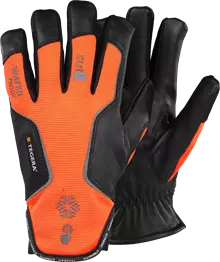
TEGERA® DYNAMIC STRENGTH 7799
Premium cut protection glove
Winter lined with high visibility colour and touchscreen function.
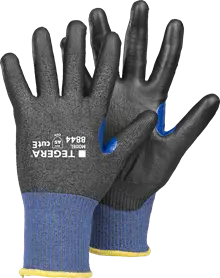

TEGERA® ARC FLASH 2010
High protection for arc flash hazards
Featuring Nomex®, a high-performance fiber for high burning protection.
3 of 3 products
CUT PROTECTION LEVEL D – HIGH CUT RESISTANCE
Cut D gloves provide high cut resistance for work involving frequent contact with sharp edges. Our selected models range from thin gloves for precision work to options for wet and oily environments.
3 of 3 products
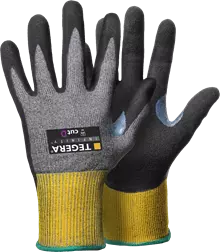
TEGERA® INFINITY 8807
Super soft, thin glove, cut level D
Great fingertip sensitivity, palm dipped. For fine assembly work in dry environments.
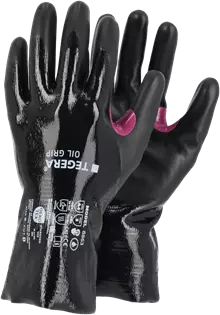
TEGERA® OIL GRIP 8863
Waterproof Cut D with nitrile grip
Waterproof Cut D glove with nitrile coating for grip and oil protection.
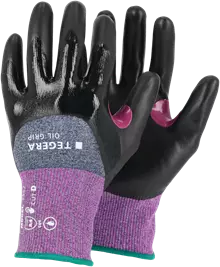
TEGERA® OIL GRIP 8862
Cut D protection with nitrile grip
Cut D glove with nitrile coating for grip and oil protection.
3 of 3 products
CUT PROTECTION LEVEL C – MODERATE CUT RESISTANCE
Cut C gloves balance cut resistance with dexterity and flexibility, making them suitable for a wide range of handling and assembly tasks. The selected models offer different combinations of protection, grip and freedom of movement.
3 of 3 products
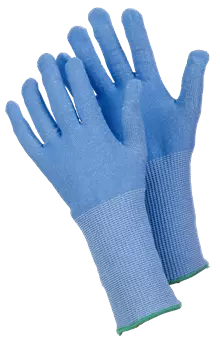
TEGERA® 913
Food approved, cut resistant glove
A soft, blue coloured glove with extra-long cuff. Perfect for handling food stuffs.
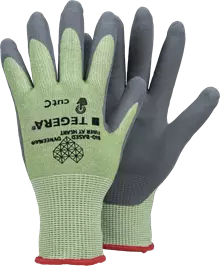
TEGERA® 457
Bio-circular with less carbon footprint
Cut protection glove (C) made of bio-circular Dyneema® fiber.
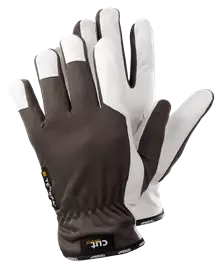
TEGERA® 215
Cut-resistant glove for precision work
Cut-resistant glove made from goatskin and Kevlar® fibers, offering great dexterity and protection for precision tasks.
3 of 3 products

Protection beyond the hands
TEGERA Cut Protection Sleeves
Cut protection doesn’t stop at your hands. TEGERA cut protection sleeves help protect your arms when handling sharp materials such as metal, glass and paper, with a comfortable fit for the working day.
CUT PROTECTION LEVELS B AND A – LOWER CUT RESISTANCE
For work with lower cut risks:
- Cut protection level B – Low cut resistance for general handling tasks
- Cut protection level A – Basic cut resistance provided by the glove material
All cut protection gloves
Explore the full range of TEGERA cut protection gloves and filter by cut protection level and other features.
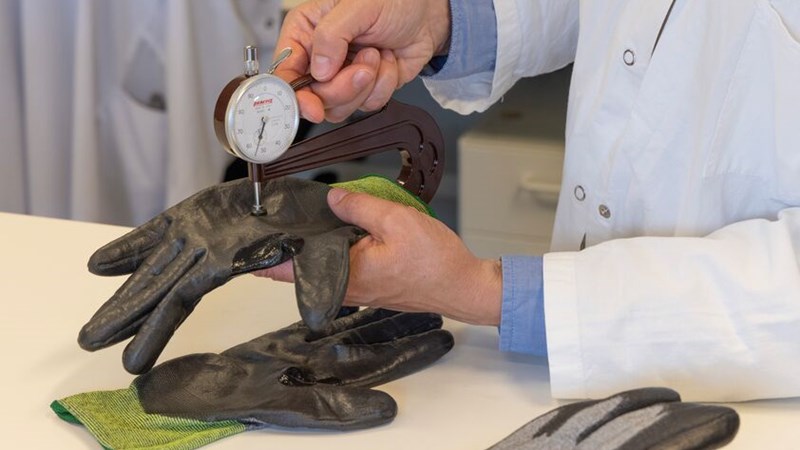
CUT F WITHOUT THE BULK
THE WORLD’S THINNEST CUT F GLOVE
High cut protection doesn’t have to mean a thick glove. TEGERA 8846 combines Cut F protection with a thin and flexible 21 gauge design for excellent dexterity and fingertip sensitivity.

Find the right glove
TEGERA® Safety & Work Glove Guides
Find practical guidance to help you choose the right gloves for different tasks, risks and working conditions.