


What Happens When Chemical Protection Gloves Fail?
What happens when chemical protection gloves fail? Explore the risks, common challenges and how to improve safety, grip and precision in demanding environments.
The real consequences of glove failure
In high-risk environments, glove failure is more than an inconvenience.
It can lead to safety incidents, reduced control and costly quality issues. In industries such as chemical handling, painting or surface treatment, even small weaknesses in protective equipment can have serious consequences.
Why performance matters in chemical protection
Chemical protection gloves must do more than resist chemicals, they need to support how work actually gets done.
Poor grip increases the risk of accidents in wet or slippery conditions. Limited fingertip sensitivity affects precision. And if gloves get in the way, they’re more likely to be removed, when exposure risks are at their highest.
“Protection should never come at the cost of control. If users lose precision, they also lose a layer of safety.”
— Carina Hemstrand, Team Manager, Chemical & Disposable Gloves, Ejendals

What is Type A chemical protection?
Not all gloves offer the same level of resistance.
Type A chemical protection (EN ISO 374) means the gloves are tested against multiple aggressive chemicals and achieve at least 30 minutes of resistance for each. This makes them suitable for demanding environments where reliable protection is essential.
Beyond protection: grip, precision and contamination
Chemical resistance is only part of the picture. Several overlooked factors can directly impact both safety and end results:
- Grip: Helps reduce the risk of slips and spills
- Precision: Enables accurate and controlled handling
- Contamination: In industries like painting, even trace amounts of silicone can lead to defects and rework
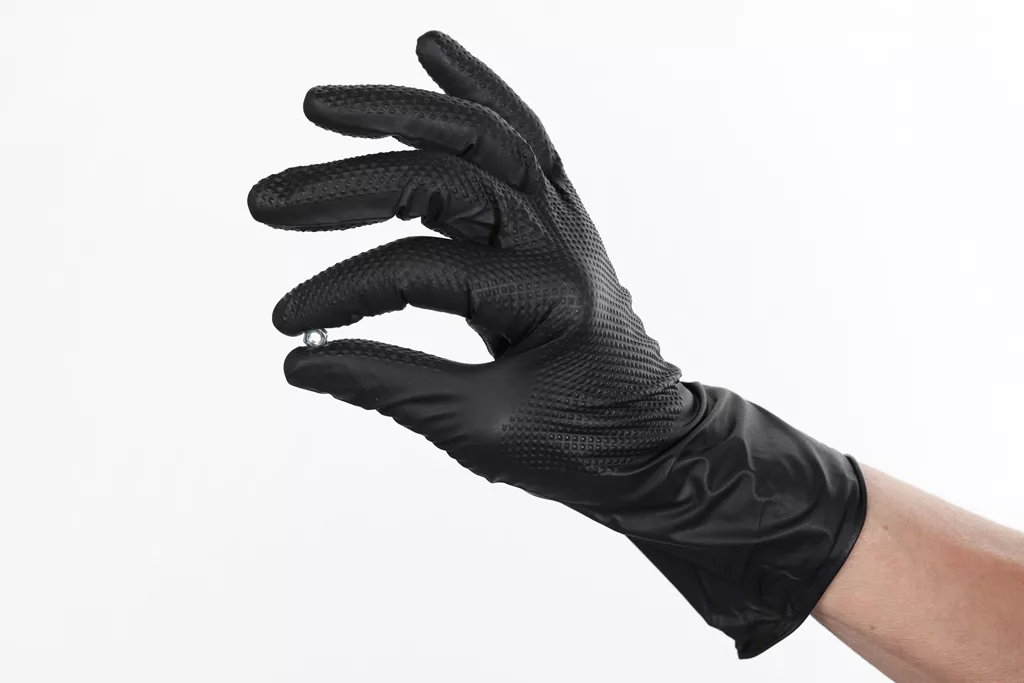
“Small design details, like grip texture and material composition, can make a real difference in everyday work.”
— Carina Hemstrand
The TEGERA CHEMFORCE 84514 and 84515 are the latest additions to the TEGERA CHEMFORCE range—disposable nitrile gloves developed for chemical splash environments where both protection and control are critical.
They offer:
- Type A chemical protection (JKOPST)
- Raised diamond grip for improved control
- 0,15 mm thickness for a balance of flexibility and durability
TEGERA Chemforce 84514
Silicone-free glove with diamond grip
Orange disposable nitrile glove with raised diamond grip and Type A chemical protection.
TEGERA Chemforce 84515
Black silicone-free glove with diamond grip
Black disposable nitrile glove with raised diamond grip and Type A chemical protection.
Find the right glove for your work environment
"Work safer with TEGERA CHEMFORCE – view the full collection now."
Carina Hemstrand - Team Manager, Chemical & Disposable Gloves at Ejendals
Supporting safe and efficient workflows
In fast-paced environments, even small interruptions can affect both safety and productivity.These gloves are designed to support a smoother workflow:
- Silicone-free – suitable for painting and surface treatment
- Powder-free
- Touchscreen compatible – so there’s less need to remove gloves during tasks
Choosing the right chemical protection gloves
When selecting chemical protection gloves, it’s worth asking:
- What chemicals are you working with?
- What level of protection is required (e.g. Type A)?
- How important is grip in your environment?
- Do tasks require high precision or sensitivity?
- Is there a risk of contamination, such as silicone?
- Will gloves need to work seamlessly with digital tools?
You can also explore TEGERA’s Guide for Chemical Resistant Gloves for more insights.
From protection to performance
For safety managers, the goal is not just compliance, it’s ensuring that protection works in practice, every day.
When gloves combine chemical resistance with grip, precision and usability, they don’t just protect—they help create safer, more efficient ways of working.
We’re here to help
Not sure what you need? Contact our experts for personal guidance.

Choose the right protection
Find the right TEGERA CHEMFORCE glove
Compare protection levels, grip and performance to match your specific chemical risks and working conditions.

Need cut protection as well?
Stronger together
TEGERA 84515 and other Chemforce models work perfectly with the ultra-thin cut liner TEGERA 8847. Learn more about 8847.
Want to learn more? Explore related topics below.

Car Technicians Test Grip and Comfort
Car technicians put TEGERA safety gloves and JALAS safety shoes to the test. Discover how grip, fit and comfort can make a difference in everyday work.

TEGERA® CHEMFORCE: Advanced Chemical Protection Gloves
Discover two new TEGERA CHEMFORCE disposable gloves designed for chemical splash protection, comfort and reliability when working with hazardous substances.

What 'Biodegradable' Really Means When It Comes to Nitrile Gloves
A closer look at biodegradability claims for nitrile gloves, what they mean and what happens when nitrile breaks down.

How Ejendals’ Laboratory Advancements Strengthen Product Safety and Quality
See how investments in laboratory equipment support chemical transparency, product safety and quality at Ejendals.