


Průvodce TEGERA pro rukavice odolné vůči chemikáliím
Použijte náš průvodce ochranou chemikálií nebo kontaktujte některého z našich prodejců a získejte pomoc s nalezením vhodné rukavice proti příslušné chemické směsi.
Prevence vystavení chemikáliím: Používejte správné ochranné rukavice
Pokud manipulujete s oleji a chemikáliemi bez ochrany rukou, vystavujete se rizikům nejen poškození kůže, ale také poškození nervového systému a životně důležitých orgánů. Také riskujete podráždění kůže, přecitlivělost a poškození korozí kvůli chemikáliím. Vždy používejte náš průvodce ochranou chemikálií nebo se poraďte s našimi prodejci při výběru rukavic.
Všechny chemické rukavice Ejendals jsou testovány a schváleny podle normy EN 374, chemických a mikroorganismických rizik. Chemické ochranné rukavice jsou určeny pro jednodenní nošení, někdy i na kratší dobu.
ZÍSKEJTE SPRÁVNOU CHEMICKOU OCHRANU S ODBORNÝM VEDENÍM
Vyberte si možnost, která nejlépe odpovídá vaší situaci.
Použijte Průvodce ochranou proti chemikáliím
Pokud jsou chemikálie a pracovní prostředí známy, náš Průvodce ochranou chemikálií vám může pomoci najít vhodné rukavice pro běžné použití.
Tato možnost je vhodná, pokud:
- Víte, s jakými chemikáliemi se manipuluje
- Bezpečnostní datové listy (SDS) jsou dostupné
- Pracovní proces a podmínky expozice jsou dobře definovány
Požádejte o posouzení chemické ochrany
Pokud je vaše žádost složitější nebo vyžaduje odborné posouzení, naši specialisté mohou posoudit vaše konkrétní podmínky a doporučit vhodné rukavice.
Tato možnost je doporučena, pokud:
- Používá se více chemikálií současně
- Podmínky expozice jsou složité nebo nejisté
- Nejste si jisti, které rukavice jsou vhodné
Co od tebe potřebujeme
- Stáhněte si a vyplňte Excelový formulář pro ochranu před chemikáliemi
- Přiložte příslušné bezpečnostní listy (SDS)
- Pošlete dokumenty příslušnému zákaznickému servisu:
- Švédsko, Norsko a Dánsko: Napište e-mail zákaznické podpoře Nordic
- Všechny ostatní trhy: E-mailová zákaznická podpora
Pro obecné dotazy týkající se ochrany před chemikáliemi kontaktujte prosím zákaznický servis prostřednictvím našeho kontaktního formuláře.
BREAK-THROUGH-TIMES (BTT) FOR A SELECTION OF COMMON CHEMICALS
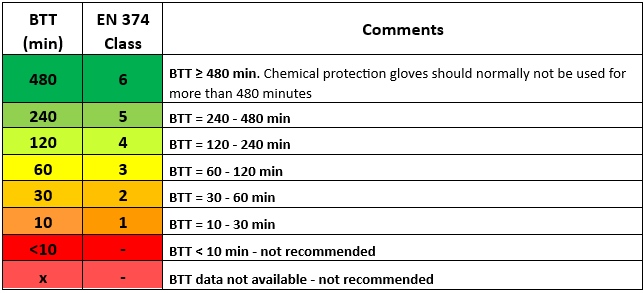
Break-through-time (BTT) is the time when a chemical is considered to have permeated (passed through) a material. It depends primarily on the material and secondarily on the thickness (and other factors). All data refer to full contact with the chemicals at room temperature, and need to be adjusted for actual conditions and additional risks.
The BTT data in this chemical protection guide originate from combined data from laboratory tests and our internal database. The BTT values are calculated from best-fit to experimental points and rounded downwards to closest EN374 Class (and two additional lower levels (0 – 5 min) that might be useful when selecting gloves for work operations of very short duration).
THINGS TO CONSIDER WHEN CHOOSING CHEMICAL PROTECTION GLOVES
- A glove that gives good protection against a certain individual chemical may give very poor protection against others or a mixture of chemicals.
- As a rule, chemical protection gloves are intended for single-day use. They must not be re-used.
- A used glove is chemically contaminated and there is a risk that the skin will be exposed to harmful substances when it is handled.
- Higher temperatures shorten the time it takes for the chemical to break through.
- Thicker materials generally mean longer breakthrough times (BTT).
- At Ejendals, for gloves consisting of multiple layers (liner etc), we denote the effective thickness of the chemical protection layer with an asterisk (*). It is this thickness we use in our estimations of BTT for a certain combination of glove model and chemical.
- Once a chemical has been absorbed, it continues to break through (permeate) the protective glove.
- Permeation through a protective glove takes place at the molecular level and is therefore not visible to the naked eye.
- Even the best gloves lose their protective properties if they are mechanically damaged or if the chemical has broken through the material.
- Strongly corrosive chemicals can destroy the glove material by breaking it down before the specified breakthrough time.
WHAT IS WHAT?
- PERMEATION is a process whereby the chemical is absorbed into and passes through the glove material at a molecular level.
- PENETRATION involves the chemical moving through pinholes and other imperfections in the glove material.
- DEGRADATION is when the glove material’s physical resistance deteriorates under the influence of a chemical.
MIXING CHEMICALS CAN HAVE UNEXPECTED RESULTS
Two chemicals with known characteristics can produce unexpected effects when mixed. Since the number of chemicals marketed is huge, it is virtually impossible to test all conceivable combinations of them. Models do exist for estimating combined effects on the basis of what is known about the component chemicals. However, they presuppose that data is available and that the various chemicals involved have the same mechanisms of action. This means that the models can only be used for groups of chemicals that act in a similar way – not for the complex mix of chemicals that we are exposed to in reality.

WARRANTY LIMITATIONS AND DISCLAIMER USE
This information is provided solely as a convenience to help you evaluate our gloves in the end-users particular application. The information provided reflects performance of glove materials under carefully controlled conditions. Ejendals AB assumes no obligation or liability in connection with glove guidance information. It is the responsibility of the purchaser and/or user to determine the level of toxicity of the materials to be handled and to select the proper glove suitable for a particular application.

TEGERA CHEMICAL PROTECTION GLOVES
Explore our range of Chemical Protection Gloves.

EJENDALS CHEMICAL PERMEATION LAB
Ejendals has invested in a first-class laboratory to serve you better when providing you with a safety glove that protects you from the hazardous effects of challenge chemicals.