


Standarden EN 511 – Beskyttelseshandsker med kuldebeskyttelse
EN 511 er den europæiske standard, der specificerer krav og prøvningsmetoder for beskyttelses- og arbejdshandsker, der er designet til at beskytte mod kulderelaterede risici. Det sikrer, at handskerne er pålideligt isolerende og vandafvisende i miljøer med lave temperaturer og beskytter hænderne mod forfrysninger og nedsat ydeevne.

Hvad omfatter EN 511?
EN 511:2006 gælder for beskyttelses- og arbejdshandsker, der bruges i kolde miljøer, uanset om det skyldes vejrforhold eller industrielle processer. Den vurderer tre vigtige beskyttende egenskaber:
- Modstandsdygtighed over for konvektionskulde – Beskyttelse mod kold luft og vind.
- Modstandsdygtighed over for kontaktkulde – Beskyttelse ved håndtering af kolde genstande eller overflader.
- Vandafvisende – Evnen til at forhindre vand i at trænge ind i handsken. Hvis det er relevant, kan handskens modstand mod vandgennemtrængning også testes.
Sådan fungerer EN 511-testen
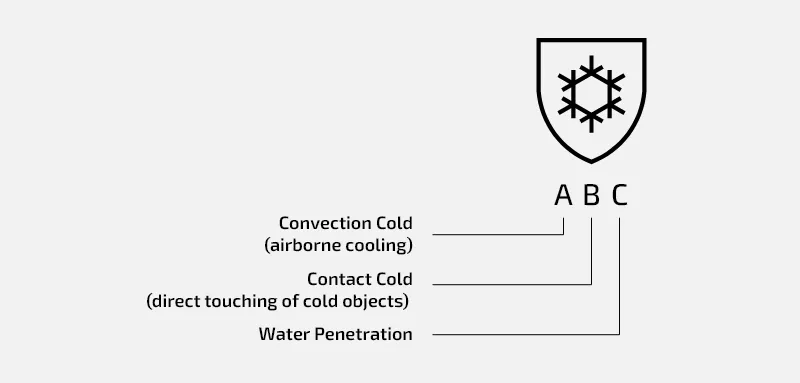
Standarden præsenteres med de forskellige testkriterier.
Handsker, der er certificeret i henhold til EN 511, får en trecifret kode (f.eks. EN 511: 231), hvor hvert tal repræsenterer ydeevnen i en af testene:
| Beskyttelsesniveau | 0 | 1 | 2 | 3 | 4 |
|---|---|---|---|---|---|
| A. Konvektionskulde (Varmeisolering ITR/m²) |
I < 0,10 | 0,10 ≤ I < 0,15 | 0,15 ≤ I < 0,22 | 0,22 ≤ I < 0,30 | 0,30 ≤ I |
| B. Kontaktkulde (Modstandsdygtighed over for termiske risici R/m²) |
R < 0,025 | 0,025 ≤ R < 0,050 | 0,050 ≤ R < 0,100 | 0,100 ≤ R < 0,150 | 0,150 ≤ R |
| C. Vandindtrængning (5 min.) |
Penetration | Ingen penetration | |||
A: Modstandsdygtighed over for konvektionskulde (0-4)
Bestemmer, hvor godt handsken isolerer mod kold luft og vind. Højere tal betyder bedre isolering.
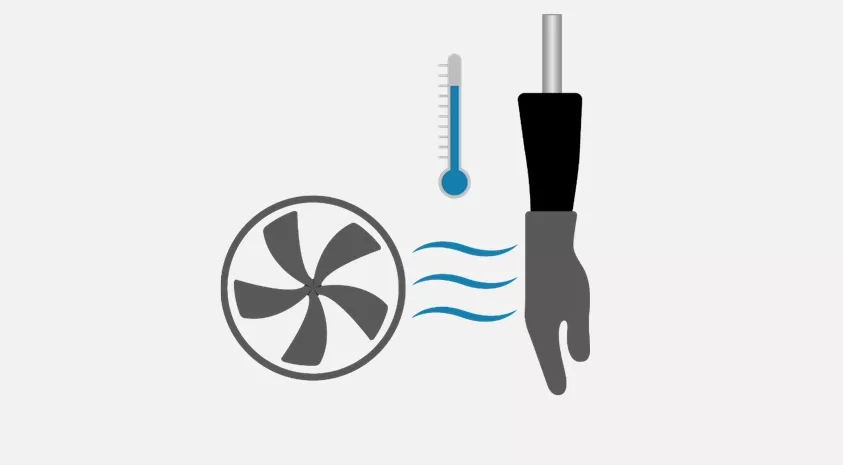
Denne test udføres ved at placere handsken på en elektrisk opvarmet hånd og måle den effekt, der kræves for at opretholde håndens temperatur mellem 30 °C og 35 °C i et kontrolleret miljø på -20 °C. Jo mere energi, der skal til for at opretholde håndens temperatur, jo lavere er klassificeringen for konvektionskulde. Det højeste beskyttelsesniveau er 4.
B: Modstandsdygtighed over for kontaktkulde (0-4)
Refererer til, hvor effektivt handsken beskytter mod varmetab ved direkte kontakt med kolde overflader.
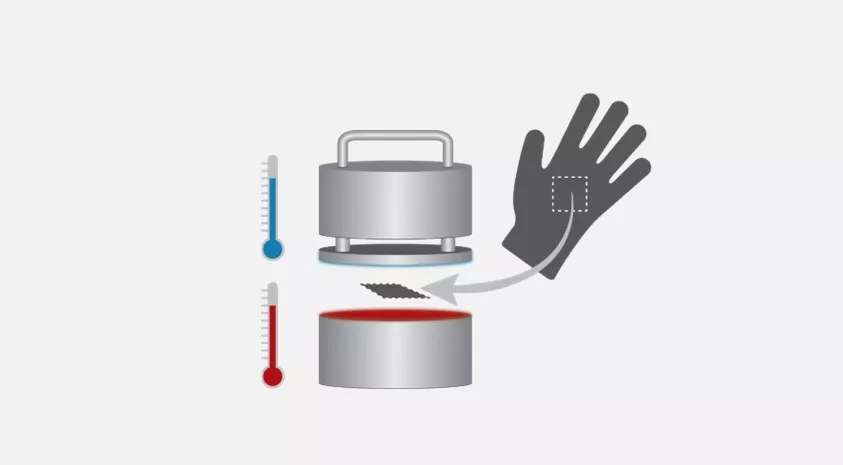
I denne test placeres en handskeprøve mellem to metalplader ved forskellige temperaturer. Testen måler temperaturfaldet i handskeprøven, som derefter bruges til at beregne den termiske modstand (R). En højere R-værdi betyder bedre isolering mod kulden, og det højeste beskyttelsesniveau er 4.
C: Modstandsdygtighed over for vandgennemtrængning (0 eller 1)
Angiver, om vand trænger ind i handsken inden for 5 minutter. Vandgennemtrængningstesten er en "bestået eller ikke bestået"-test
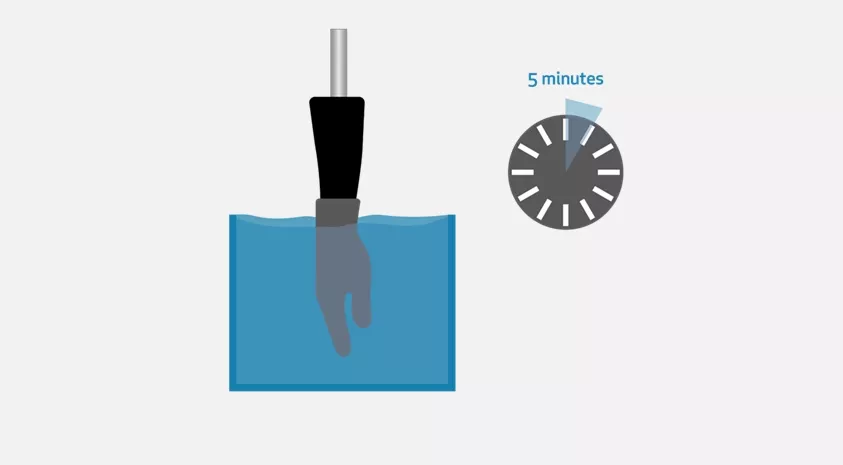
For at fastslå vandtætheden nedsænkes handsken i vand i 5 minutter. Hvis handsken bevarer sin uigennemtrængelighed, består den med niveau 1. Handsker, der ikke består, får en 0-klassificering, mens et "X" betyder, at handsken ikke er testet
0 = vandgennemtrængning
1 = ingen vandgennemtrængning
Eksempel på, hvordan man fortolker et resultat i henhold til EN 511
Eksempelresultat EN 511: 231
2 = moderat beskyttelse mod konvektionskulde
3 = høj beskyttelse mod kontaktkulde
1 = vandtæt i mindst 5 minutter
Hvorfor EN 511 er vigtig
- Sikkerhed under ekstreme forhold: Forebygger forfrysninger og kulderelaterede skader i krævende miljøer.
- Ydeevne og komfort: Bevarer fingerføling og greb selv i frostgrader.
- Overholdelse af reglerne og kvalitetssikring: Certificerede handsker lever op til kravene i EU's forordning om personlige værnemidler (EU) 2016/425.
Typiske anvendelsesområder og brancher
- Udendørs byggeri og forsyningsvirksomheder
- Kølerum og logistik
- Udvinding af olie og gas
- Vintervedligeholdelse af veje
- Håndtering af frosne fødevarerg
Sådan vælger du de rette EN 511-certificerede handsker
- Til udendørs arbejde i vind og sne: Se efter høj modstandsdygtighed over for konvektionskulde (niveau 3-4).
- Til håndtering af frosne materialer: Prioriter høj modstandsdygtighed over for kontaktkulde (niveau 3-4).
- Til våde forhold: Sørg for modstandsdygtighed over for vandgennemtrængning = 1.
Explore All Cold-Insulated Work Gloves
Discover Tegera’s full range of cold-protection gloves. Use the filter tool to quickly find the perfect glove for your work environment.
Get more Knowledge
Explore All TEGERA Safety Standards
TEGERA safety gloves are developed to meet a wide range of certified standards—from cut and chemical protection to heat resistance and cold insulation. Explore how each standard contributes to safer work environments and helps keep workers protected across every task.