


Warum Berufsschuhe sich besser eignen als Sportschuhe
Ganz gleich, ob Sie in der Krankenpflege, bei der Postzustellung, im Friseursalon oder als Büro- oder Restaurantfachkraft tätig sind, Sie verbringen einen Großteil Ihres Arbeitstages auf den Beinen. Damit Sie sich bei der Arbeit wohlfühlen, ist geeignetes Schuhwerk unumgänglich.
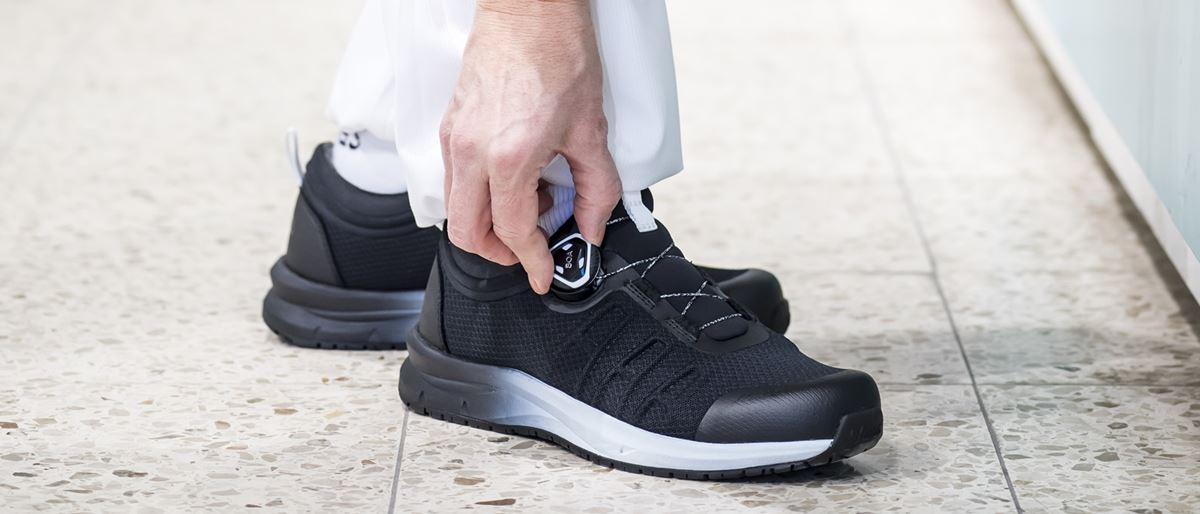
Viele Menschen laufen bei der Arbeit in Turnschuhen, Flip-Flops oder modischen Schuhen herum, ohne darüber nachzudenken, wie stark ungeeignetes Schuhwerk ihre Muskeln und Gelenke belastet. Ein Großteil der Arbeitsausfälle aufgrund von Fuß- und Rückenschmerzen kann mit Hilfe von professionell ausgewählten und zertifizierten Schuhen vermieden werden.
Zahlreiche Gründe sprechen dafür, die privaten Schuhe zu Hause zu lassen. Sie sind nicht dafür gemacht, acht Stunden am Tag getragen zu werden, und nutzen sich bei täglichem Gebrauch entsprechend schnell ab. Sie bieten auch nicht die erforderliche Stabilität, um Verletzungen zu vermeiden. Zudem leitet die Sohle Feuchtigkeit nicht schnell genug ab, was zu Schweißfüßen und Gesundheitsproblemen wie Nagel- und Fußpilz führen kann.
ESD-Schutz für den industriellen Bereich und Krankenhäuser
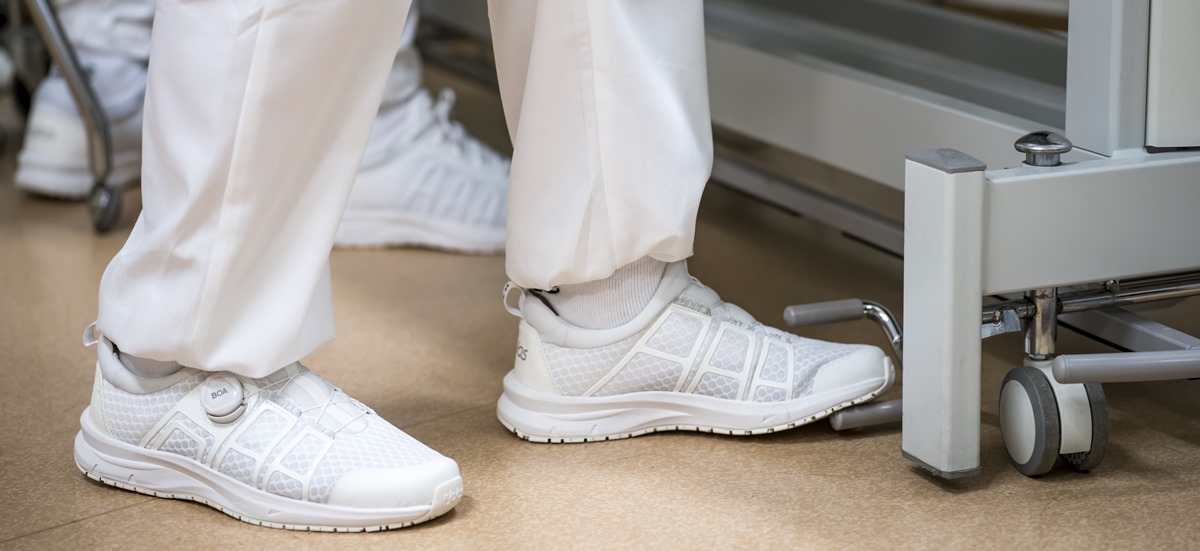 Schuh-Modell auf dem Bild: JALAS SpOc 5462
In Branchen mit empfindlichen elektronischen Geräten sollten die Beschäftigten stets ESD-Schuhe (ESD = elektrostatische Entladung) tragen – ein Thema, das erst seit kurzem in das Bewusstsein vieler Arbeitgeber gerückt ist.
„In Krankenhäusern gibt es zum Beispiel kritische elektronische Geräte“, erklärt Juho Järvinen, Product Line Director, JALAS® Schuhe, Ejendals. „ESD-Schuhe sind so konzipiert, dass sie die statische Elektrizität vom Körper wegleiten. Wenn sich Ihr Körper statisch auflädt und Sie ein Gerät berühren, kann es andernfalls zu Schäden an der Elektronik kommen. In einem Krankenhaus kann dies schwerwiegende Folgen haben. Aber auch in vielen anderen Arbeitsumgebungen.“
How to think about, and select, occupational footwear
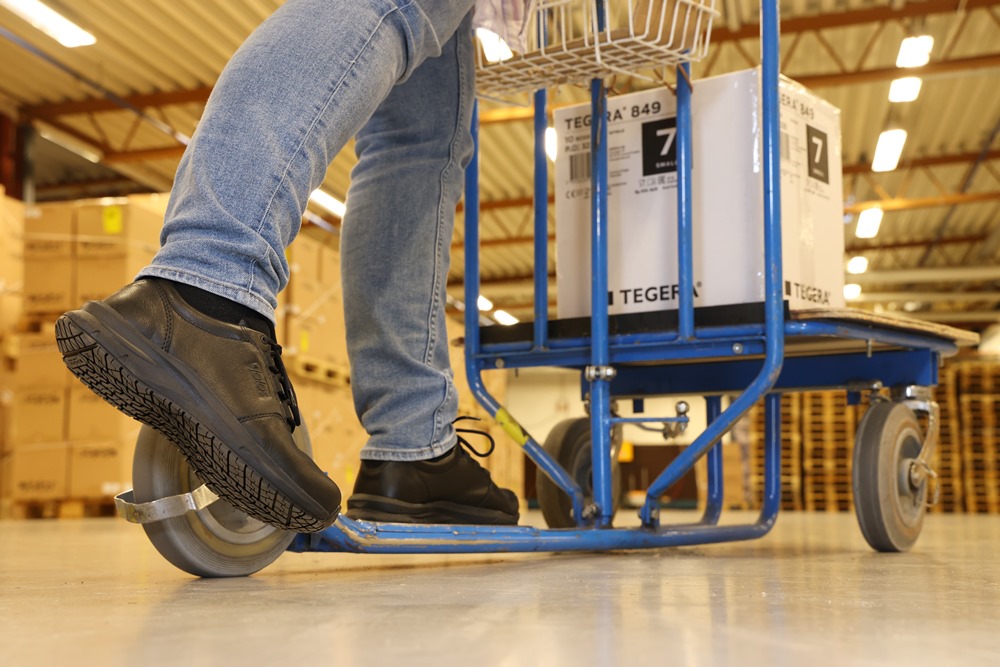
Work shoes (also known as “occupational footwear”) can benefit all workers in all industries. The right way to think about work shoes is to think about how you move at work. When you buy hiking and running shoes, you discuss the surface you’re on, how the shoes will be used, and what type of feet you have. You should think the same way when buying occupational footwear.
”Do you walk on hard surfaces?” asks Juho. “Are the floors slippery? Do you do heavy lifting? Do you do moments where you push something in front of you, or pull something behind you? Do you have a job where you stand still, move sideways, or climb? What type of feet do you have? All these questions affect what shoes you need, so it's good to get help from the experts in stores that sell work and safety shoes. They can also scan your feet and thus get an exact fit.”
Make shoes your assets, not your liabilities
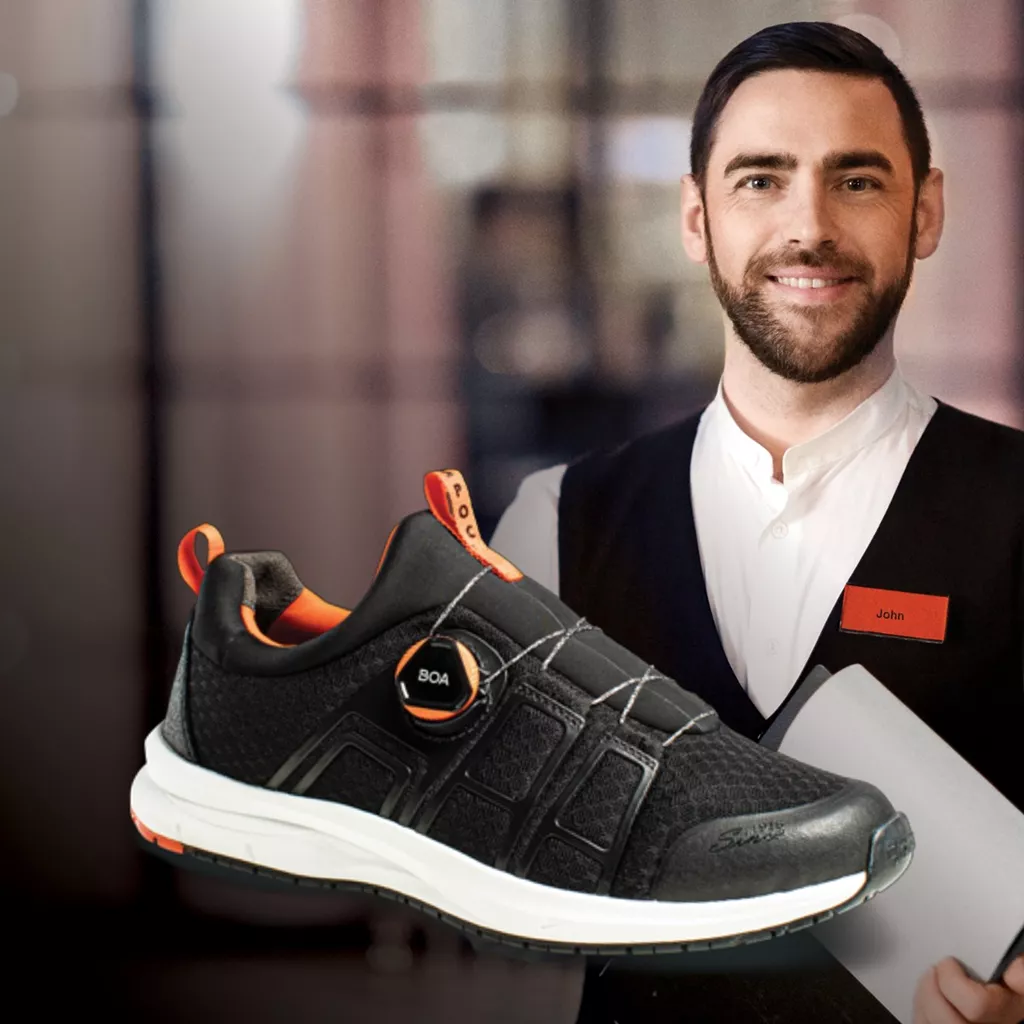
There has been great progress when it comes to the design of work shoes. JALAS SpOcs look like a sports shoe but are certified for work and provide both comfort and stability. Their wear surfaces are reinforced, providing longer shoe life than most “street” shoes. JALAS work shoes are tested and certified according to EN ISO 20347:2012 to ensure their durability and safety.
As bad as it is to run the 100-meter hurdles in work shoes, it is just as harmful to walk for eight hours in a running shoe. Which is why we design work shoes that are so stylish that you want to wear them at work.
Juho Järvinen
“And it makes a big difference to your health,” continues Juho. “Many people feel that they become more energetic. The reason why: they aren’t compensating for using the wrong type of shoe, so their body uses less energy. Their shoes go from being a liability to becoming an asset, one that helps them in their work movements and their overall well-being.”
JALAS SpOc - the game changer
JALAS SpOc, the game changer for people in the service sector. The shoes look good, feel good and protect you.