


Anforderungen für den Kontakt mit Lebensmitteln – Risiken bei Sicherheits- und Arbeitshandschuhen
Sicherheitshandschuhe, die bei der Handhabung von Lebensmitteln verwendet werden, müssen strengen Vorschriften entsprechen, um sicherzustellen, dass sie die Lebensmittelsicherheit nicht gefährden. Gemäß der Verordnung (EU) Nr. 1935/2004 müssen Materialien, die mit Lebensmitteln in Kontakt kommen, sicher und stabil sein und der guten Herstellungspraxis entsprechen.
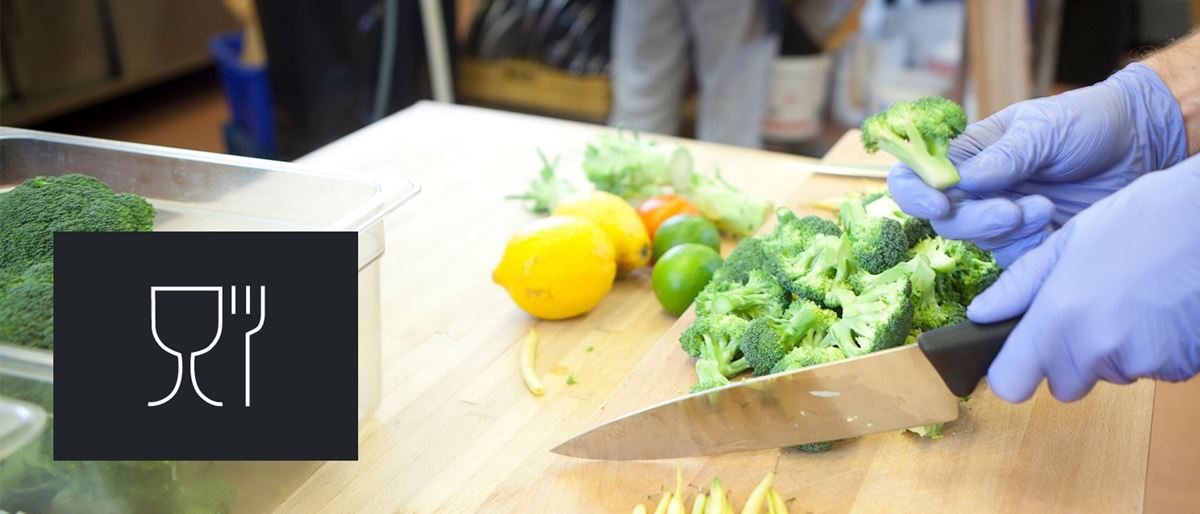
Welche Risiken bestehen?
Materialien und Gegenstände, die in Handschuhen für den Kontakt mit Lebensmitteln verwendet werden, müssen so hergestellt sein, dass sie unter normalen oder vorhersehbaren Verwendungsbedingungen keine Stoffe in Mengen an Lebensmittel abgeben, die:
- eine Gefahr für die menschliche Gesundheit darstellen
- unzulässige Veränderungen in der Zusammensetzung des Lebensmittels bewirken
- den Geschmacks, Geruchs oder das Aussehen des Lebensmittels (organoleptische Eigenschaften) beeinträchtigen
Diese Risiken sind besonders relevant, wenn Handschuhe in direktem Kontakt mit Lebensmitteln oder Trinkwasser verwendet werden.
Zulassung für alle Arten von Lebensmitteln oder nur für fettfreie Lebensmittel – was ist der Unterschied?
Einige Handschuhe sind für den Kontakt mit allen Arten von Lebensmitteln zugelassen, während andere bestimmten Einschränkungen unterliegen. So kann ein Handschuh beispielsweise für alle Arten von Lebensmitteln außer fettigen Lebensmitteln zugelassen sein. Diese Unterscheidung ist wichtig, da fettige Lebensmittel aggressiver mit Handschuhmaterialien interagieren können, wodurch möglicherweise mehr Substanzen in die Lebensmittel übergehen.
- Alle Arten von Lebensmitteln: Dies umfasst trockene, feuchte, saure und fettige Lebensmittel. Handschuhe, die für alle Arten von Lebensmitteln zugelassen sind, werden umfangreichen Tests unterzogen, um die Sicherheit unter einer Vielzahl von Lebensmittelbedingungen zu gewährleisten.
- Nicht fettige Lebensmittel: Dies umfasst Lebensmittel, die wenig bis kein Fett enthalten, wie Obst, Gemüse, Getreide und magere Proteine. Handschuhe, die nur für nicht fettige Lebensmittel zugelassen sind, sollten nicht für Produkte wie Käse, Öle oder fettiges Fleisch verwendet werden.

Überprüfen Sie stets die Zertifizierung und Kennzeichnung des Handschuhs, um sicherzustellen, dass er für die beabsichtigte Anwendung mit Lebensmittelkontakt geeignet ist.
Food approved Tegera gloves
6 of 74 products
TEGERA® INFINITY 8807
Super soft, thin glove, cut level D
Great fingertip sensitivity, palm dipped. For fine assembly work in dry environments.
TEGERA® 849
Disposable glove for many purposes
Dressy and durable nitrile disposable glove with long cuff for versatile work.
TEGERA® 918
Cut F for food contact with extra thickness
Insulated food liner with Cut F protection for cold food handling environments.
TEGERA® INFINITY 8815
Thin nitrile dipped cut F
Great fingertip sensitivity, palm dipped. For precision work in dry environments.

TEGERA® 916
Cut F liner for food contact
Washable Cut F food liner for high dexterity and protection in food handling.

TEGERA® 8847
Ultrathin Cut F liner with comfort
21 -gauge liner with CRF® Omni Technology, cut protection F, food-approved.
6 of 74 products
Non Fatty Food approved Tegera Gloves
6 of 11 products
TEGERA® CHEMFORCE 494
High safety multi protection glove
Winter lined neoprene coated glove with chemical-, cut-, and heat protection.

TEGERA® 8833
Shut out the winter, shut out the wet
A very soft and comfortable winter lined glove with waterproof latex dipping.

TEGERA® 8833R
Shut out the winter, shut out the wet
A very soft and comfortable winter lined glove with waterproof latex dipping.
TEGERA® CHEMFORCE 7363
3 strong protections in one glove
Chemical, heat and cut protection glove with non-slip finish for extra grip.
TEGERA® CHEMFORCE 7361
2 protections in one glove
Chemical and heat protection glove with sandy finish for a perfect grip.
TEGERA® 318
Soft, breathable glove with good grip
Dark blue textile glove with vinyl dots. Withstands contact heat up to 100°C/212°F.
6 of 11 products
Professions That Require Food approved Gloves
Gloves compliant with food contact regulations are essential for:
- Food processing and packaging workers
- Catering and kitchen staff
- Agricultural and fisheries workers
- Beverage production and bottling teams
- Quality control and hygiene inspectors
These professionals rely on gloves that protect both the wearer and the food being handled.
Frequently Asked Questions
What Does the “Food Contact” Logo Mean?
It indicates that the glove complies with EU regulations for safe use in contact with food.
Can These Gloves Be Used With All Types of Food?
Some gloves are approved for contact with all types of food while others have restrictions, always read the Food declaration of compliance for more info.
Are These Gloves Reusable?
It depends on the glove type. Some are designed for single use, while others are durable and reusable under proper hygiene protocols.
How to Verify Compliance?
Look for documentation from the manufacturer and the presence of the food contact logo on the glove or packaging. At Ejendals you can find it in the Food Declaration of Compliance.
We are here to guide you
Wether you have questions about safety standards, our assortment or how to select the right product, don't hesitate to reach out to us.
Get more Knowledge
Explore All TEGERA Safety Standards
TEGERA safety gloves are developed to meet a wide range of certified standards—from cut and chemical protection to heat resistance and cold insulation. Explore how each standard contributes to safer work environments and helps keep workers protected across every task.